6 x 5ml Sample Pack £59.99: Verified Cruelty Free Perfume Dupes
The verdict is simple: choose verified vegan and cruelty-free dupes over guesswork, and start with a sampling route rather than a full bottle. Sample packs and discovery sets let you trial multiple scents risk-free, while selected bottles give you a proper introduction to signature accords without the designer price tag or the ethical guesswork.
TL;DR:
- Sampling sets and travel atomizers are essential tools to test cruelty-free and vegan dupes on your skin before committing to full bottles.
- Verify cruelty-free claims with third-party certifications like Leaping Bunny and check supplier transparency, source traceability, and regional testing laws.
- Scent selection should match occasion and season, with lighter citrus for daytime, woody and smoky for cooler months, and full-day patch tests to assess longevity.
- Price advantages come from formulations that skip luxury packaging, with sample packs offering a lower-cost way to find suitable scents.
- Always confirm vegan status separately from cruelty-free claims, as certification and ingredient sourcing are key to ethical fragrance choices.
Table of Contents
- Which top cruelty-free perfume dupes should you try first?
- How do you verify vegan and cruelty-free claims?
- How do you choose a dupe by scent, skin, and budget?
- Why trust Alexandriauk’s dupe recommendations?
- What conventional dupe advice gets wrong
- Where to buy your first cruelty-free dupes
- Sources
- FAQ
Which top cruelty-free perfume dupes should you try first?
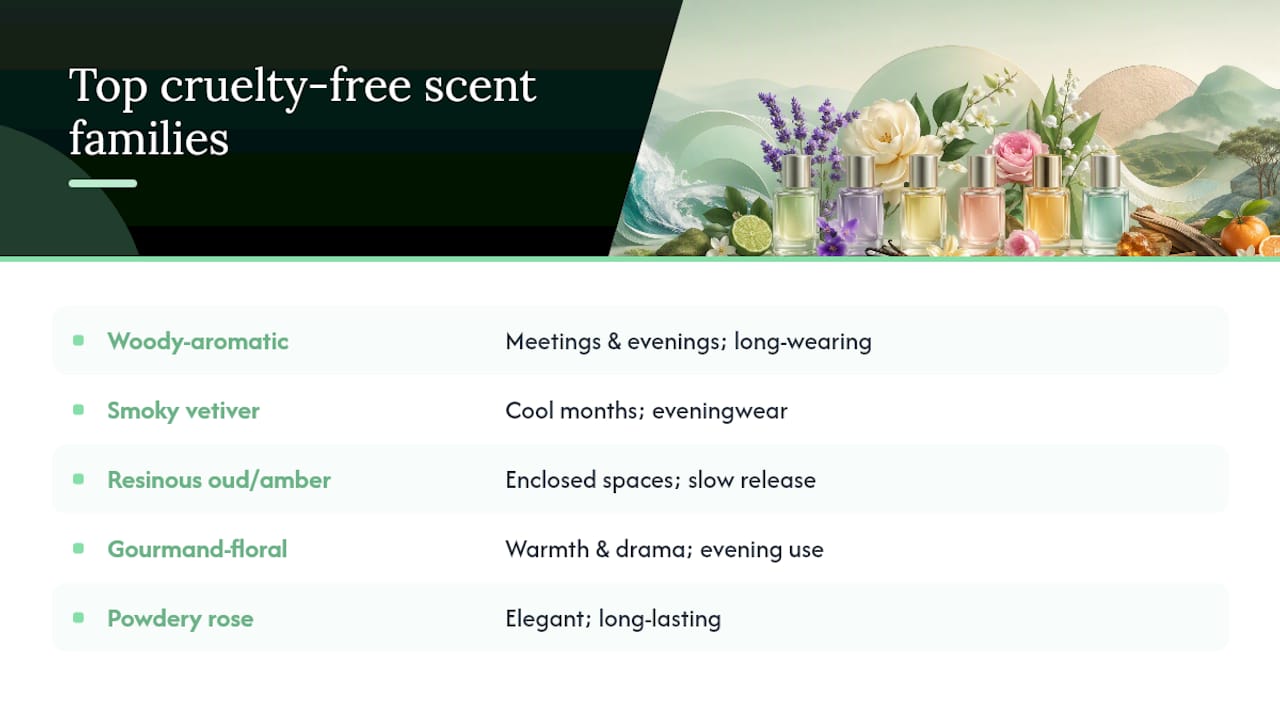
Choosing well among ethical fragrance alternatives comes down to matching scent family to occasion, then confirming the claim before you commit to a full bottle. Alexandriauk’s range spans gourmand warmth, woody sophistication, and smoky sensuality, each built to stand alongside recognisable signatures without ever naming the house that inspired them.
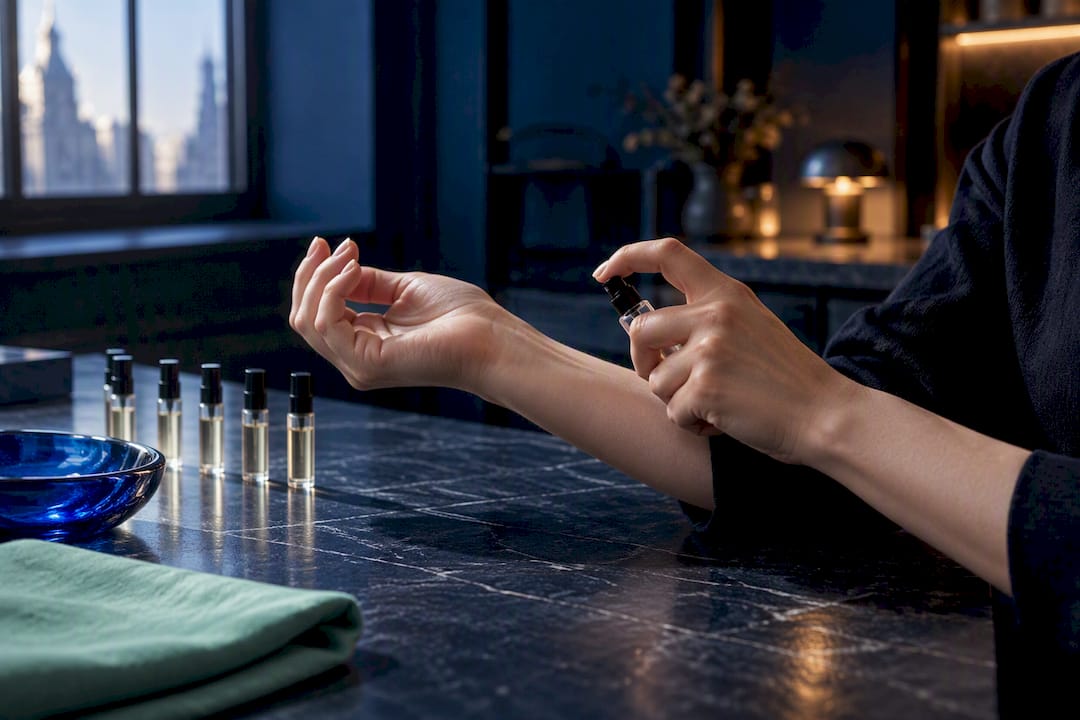
Sample packs are a sensible entry point for anyone hunting for the best vegan perfume dupes without wasting money on a scent that turns sour on the skin. Several 5ml vials give you room to test contrasting families, from citrus-forward openings to deep ambers, and the format suits anyone still building a fragrance wardrobe.
Some fragrances channel a sharp, professional woody-aromatic character, the kind of scent built for meetings and evenings that follow straight after. These suit buyers who want authority in a bottle rather than sweetness, and feature oil concentrations intended to support longevity.
Other offered scents take the smoky, earthy register of classic vetiver and give it depth without heaviness, suited for cooler months and evening wear, appealing to those who find lighter aromatic colognes too thin for their taste.
Some fragrances lean into resinous, incense-laced territory, for those drawn to oud and amber but wary of anything overpowering. They tend to perform best on cooler skin and in enclosed spaces where their slow-release character has room to unfurl.
Discovery sets widen the sampling net further than smaller packs, useful for those still undecided between masculine, feminine, and unisex families before they commit to a full bottle.
Some gourmand-floral fragrances are built for warmth and drama, suitable for evening occasions and for those who want a scent memory that lingers on clothing long after application.
Certain fragrances feature luminous, powdery rose accords with extended staying power, offering elegance without sharpness, often presented at eau de parfum concentration to support longer wear time on skin.
Travel atomisers are available, which are not fragrances themselves but provide a solution for sampling on the move by allowing decanting a favourite scent into a spill-proof 10ml or smaller vessel for handbags, gym bags, and carry-on luggage.
Products on this site are developed without animal testing and formulated to IFRA compliance, and sample availability across the range aims to prevent customers being locked into a full bottle before testing the scent on their own skin. Returns on unopened bottles are generally handled through standard consumer protections, though opened testers and used atomisers are often excluded, so patch testing from a sample first is always recommended.
Pro Tip: Spray a sample onto skin rather than paper before buying a full bottle. Skin chemistry changes how top, heart, and base notes develop over several hours, something blotter paper simply cannot replicate.
How do you verify vegan and cruelty-free claims?
Neither “vegan” nor “cruelty-free” carries a statutory definition in the cosmetic products regulation that governs GB labelling, which means brands must substantiate the claims themselves rather than rely on a legal standard. That gap is exactly where greenwashing creeps in, so a little diligence protects both your wallet and your principles.
Run through this before trusting any label:
- Look for Leaping Bunny or the Vegan Trademark rather than a brand’s own badge design, since these third-party certifications require independent audit.
- Ask whether the brand publishes a full INCI list, not just a marketing summary of “natural” ingredients.
- Check whether the supplier discloses sourcing or traceability information for key botanicals.
- Note which markets the product is sold into, since some regions still legally require animal testing for imported cosmetics, which complicates a blanket cruelty-free claim.
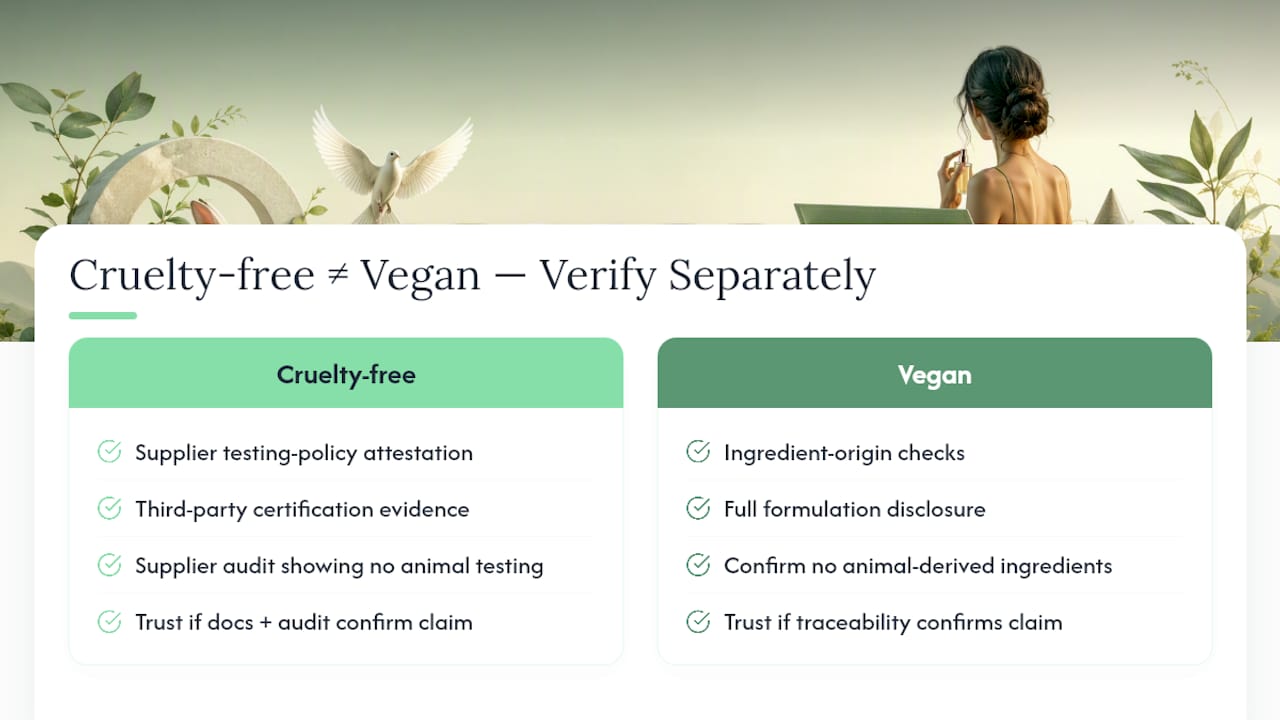
- Treat vegan and cruelty-free as two separate checks entirely. Trade body guidance confirms a cruelty-free brand can still use animal-derived ingredients such as beeswax or musk fixatives, so one label never guarantees the other.
48% of beauty shoppers actively seek out brands with clearer ethical commitments, according to research behind the Planet Positive Beauty Guide. That demand is precisely why certification matters more than a green leaf icon on a bottle.
How do you choose a dupe by scent, skin, and budget?
Scent mapping starts with occasion, not just family. Warm gourmand and amber accords suit evening wear and colder months, while citrus and aromatic openings work better for daytime and warmer climates. Woody and smoky bases like vetiver or oud reward patience, since they often need thirty minutes on skin before revealing their true character.
- Buy a sample pack or discovery set before any full bottle, always.
- Patch test on the inner wrist or elbow crease, waiting 24 hours if you have a history of skin sensitivity.
- Test on skin, never on paper, since body warmth changes how base notes settle.
- Reserve full-bottle purchases for scents you have already worn for a full day.
Price bands for cruelty-free colognes and women’s fragrances alike tend to sit well below the designer originals they draw inspiration from, largely because dupes skip the marketing and packaging premiums that inflate luxury pricing. If you’re still torn between two scent families, more samples cost less than one wrong full bottle.
Pro Tip: Keep a small notebook or phone note logging how each sample smelled at hour one, hour four, and the next morning on your pillow. Longevity and drydown matter more than the first ten minutes.
Why trust Alexandriauk’s dupe recommendations?
The brand focuses on inspired-by fragrances formulated with considerations for oil concentration, cruelty-free production, and IFRA compliance. This specialised approach, rather than a general beauty retailer’s method, informs the selections discussed.
Vetting a dupe before it reaches the catalogue means asking the questions industry guidance on ethical sourcing recommends: supplier attestations on testing policy, ingredient origin for key botanicals, and a willingness to disclose formulation detail beyond a vague “fragrance” label. Readers wanting the fuller picture on sourcing can also see Alexandriauk’s ethical dupe buying advice, which sits within the site’s broader fragrance compendium.
This article was compiled by Dave, whose editorial focus at Alexandriauk centres on cruelty-free formulation and scent-matching for readers moving away from designer originals.
What conventional dupe advice gets wrong
Most dupe guides treat “cruelty-free” as a single tickbox, then move straight to price comparisons. That’s backwards. The research is clear that cruelty-free and vegan are separate claims requiring separate verification, yet the average roundup conflates them into one reassuring badge and calls it a day.
The bigger blind spot is sampling. Readers are told to “do their research” on ingredients, then pointed straight to a 100ml bottle purchase, skipping the one step that actually de-risks the decision. A discovery set costs a fraction of a full bottle and tells you within a week whether a scent’s drydown suits your skin, something no ingredient list can predict on its own.
What should come first is patch testing and short-term sampling, not brand loyalty or packaging aesthetics. Get the certification checks right, then sample before you commit. Everything else, including which notes you personally prefer, sorts itself out once you’ve actually worn the scent for a full day rather than sniffed it on a card in a shop.
— dave
Where to buy your first cruelty-free dupes
Alexandriauk’s advantage over hunting for ethical dupes elsewhere is straightforward: you get inspired-by fragrances at a fraction of designer pricing, formulated without animal testing and built on oil concentrations designed to outlast cheaper alternatives on the shelf; explore more ethical options at Fragrance | Jeffi Inc.
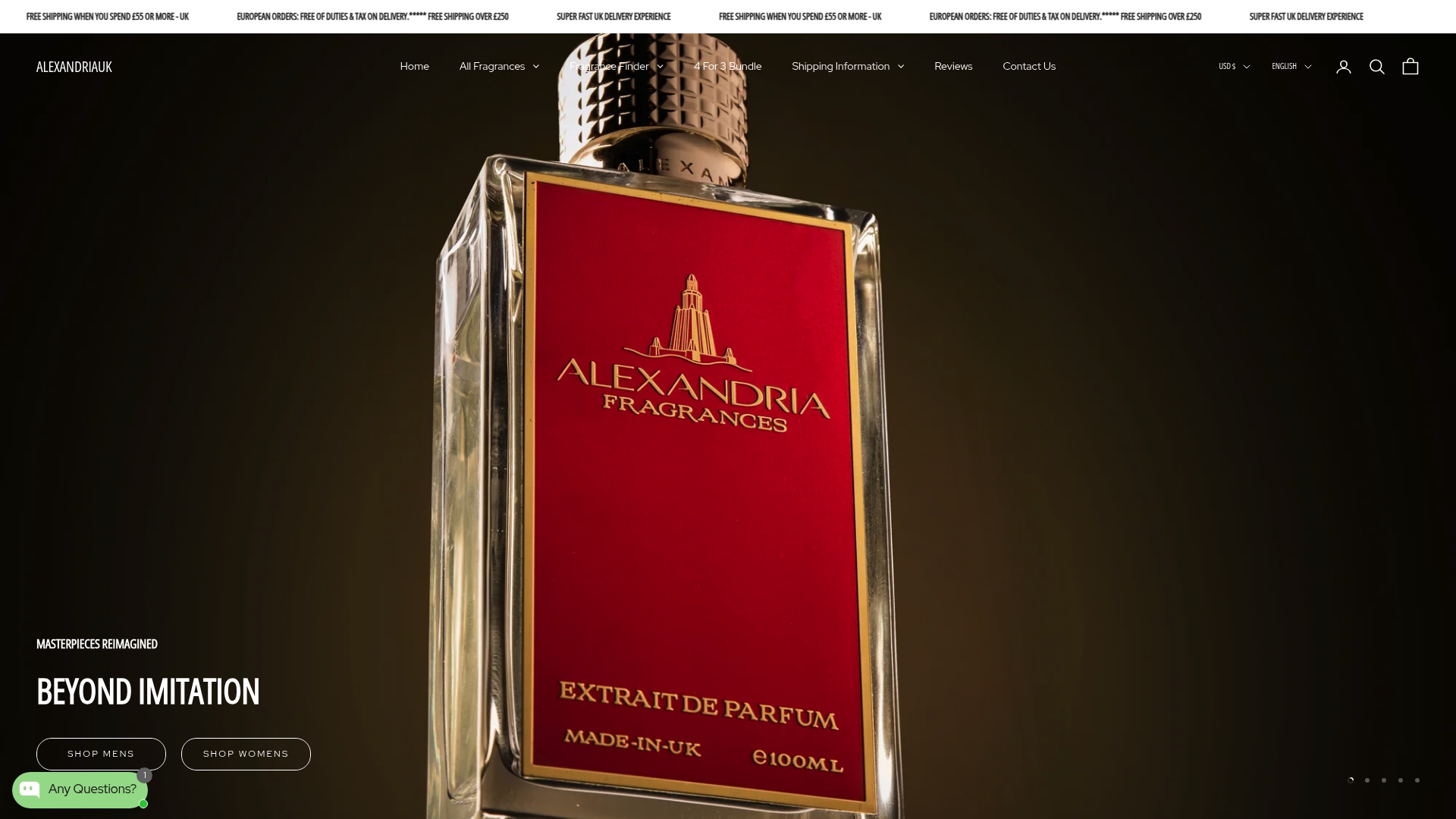
Start with the Sample Pack 6 x 5ml for £59.99 or the DISCOVERY SET at $83, both built for exactly the kind of side-by-side testing this guide recommends. Once you’ve found a favourite, the EMPTY Travel Atomiser at £8.99 lets you carry it without hauling a full bottle through security, and a bottle like Cleopatra (For Her) makes a fitting first full-size purchase once a gourmand-floral has proven itself on your skin. Browse the women’s and men’s collections to see the full range, and check each product page for current sampling terms before you buy.
Sources
- Planet Positive Beauty Guide — British Beauty Council
- Not so sexy: the health risks of fragrances — EWG
- CTPA statement on animal testing and cosmetic ingredients — CTPA
FAQ
What is the best cruelty-free perfume?
There’s no single “best” fragrance, since it depends on scent family and skin chemistry, but the strongest picks combine a published cruelty-free policy with independent certification such as Leaping Bunny. Alexandriauk formulates every fragrance without animal testing and to IFRA compliance, making the range a reasonable starting point for anyone prioritising ethics alongside longevity.
Which company has the best perfume dupes?
Quality varies by house and by scent family, so the honest answer is to compare oil concentration, sampling options, and ethical claims rather than trust marketing alone. Alexandriauk publishes its cruelty-free and IFRA-compliant approach directly on its best-selling dupes collection, which makes verification straightforward before you buy.
What are some good vegan perfume dupes?
Vegan dupes worth exploring include gourmand-floral profiles like Cleopatra (For Her) and rose-forward blends like Lady Diana Exclusive, both formulated without animal-derived ingredients. Always confirm vegan status separately from cruelty-free status, since the two claims aren’t interchangeable.
What are the top 10 best clone perfumes?
Rankings shift constantly as formulations improve, so rather than chase a fixed top ten, focus on scent families that suit your lifestyle and test them via a sample pack first. Woody-aromatic, gourmand-floral, and smoky-resinous dupes each perform differently on skin, which is precisely why sampling before buying beats any generic list.
Are fragrance dupes safe for sensitive skin?
Fragrance mixtures can contain undisclosed ingredients that irritate sensitive skin, according to EWG’s research into fragrance chemicals. Patch testing a sample on the inner wrist for 24 hours before wearing a new scent all day is the safest approach, particularly for anyone with a history of reactions.