
Niche vs designer perfume: choose your ideal scent in 2026
Choosing between niche and designer perfumes confuses many fragrance enthusiasts. You might assume niche perfumes always outperform designer options, but that’s not necessarily true. Both categories offer distinct advantages depending on your preferences, budget, and lifestyle. This guide clarifies the key differences in quality, exclusivity, price, and production to help you make confident, informed fragrance choices that align with your personal values and scent goals.
Table of Contents
- Understanding Niche And Designer Perfumes: Definitions And Origins
- Ingredient Quality And Fragrance Composition: What’s Inside Matters
- Production And Exclusivity: Scale, Availability, And Artistic Freedom
- Longevity, Scent Complexity, And Consumer Experience
- Pricing, Marketing, And Value: Why Do Niche Perfumes Cost More?
- Common Misconceptions: What Most People Get Wrong About Niche Vs Designer
- Choosing The Right Perfume: Practical Tips For Enthusiasts
- Explore Quality Perfumes And Deals At Alexandria UK
- Frequently Asked Questions
Key takeaways
| Point | Details |
|---|---|
| Niche perfumes emphasise artistry | Small-batch production with rare ingredients creates unique, exclusive scents. |
| Designer perfumes prioritise mass appeal | Broad availability and consistent formulas target wide consumer bases. |
| Ingredient quality varies in both | Natural vs synthetic balance affects scent depth and evolution differently. |
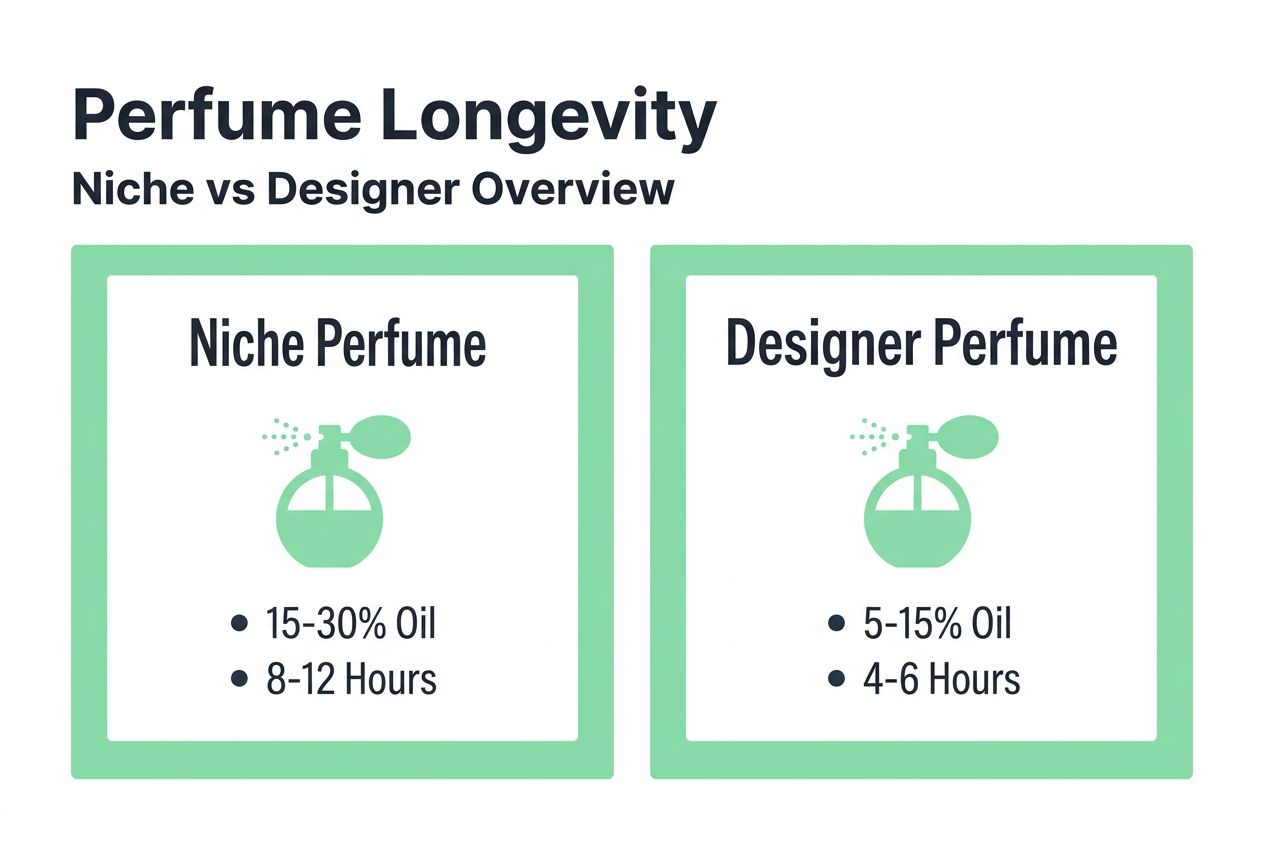
| Longevity depends on oil concentration | Niche perfumes typically contain 15–30% oils vs 5–15% in designer fragrances. |
| Price reflects more than quality | Marketing, sourcing ethics, and production scale influence cost beyond formula. |
Understanding niche and designer perfumes: definitions and origins
Niche perfumes are crafted in small batches by specialised or independent perfume houses, focusing on unique, artisanal scents and rare, high-quality ingredients, as opposed to mass-produced designer fragrances. These artisanal products typically see production runs in the hundreds per batch, allowing perfumers creative freedom to experiment with unconventional scent profiles. Designer perfumes, in contrast, are mass-produced fragrances linked to major fashion brands, with production runs reaching tens of thousands of units to ensure consistent supply across global retail networks.
The market focus differs fundamentally between these kinds of perfume brand. Niche brands target exclusivity and artistry, appealing to consumers who value individuality and olfactory complexity. Designer perfumes aim for broad appeal, balancing accessibility with brand prestige to attract diverse consumer demographics.
Typical niche brand characteristics include:
- Limited distribution through select retailers and brand boutiques
- Unique, often polarising scent compositions
- Minimal advertising relying on word-of-mouth and community
- Higher price points reflecting ingredient rarity and small-scale production
- Focus on perfumer artistry over mass market trends
Designer brand traits typically feature:
- Wide availability in department stores and online retailers
- Celebrity endorsements and extensive marketing campaigns
- Formulas designed for broad consumer acceptance
- Accessible price points leveraging economies of scale
- Strong visual branding tied to fashion house identity
Understanding these foundational differences helps you recognise why niche perfume brand trends in 2026 emphasise sustainability and ethical sourcing alongside artisanal craftsmanship. These business models shape everything from ingredient selection to retail experience.
Ingredient quality and fragrance composition: what’s inside matters
Both niche and designer perfumes use a mix of natural and synthetic ingredients, but niche brands emphasise rare natural extracts that add complexity to the fragrance profile. Niche perfumers frequently incorporate precious materials like oud, ambergris, iris oil, and natural musks, which contribute distinctive character and depth. Designer perfumes rely more heavily on synthetic blends to ensure cost efficiency, consistency across large production runs, and regulatory compliance.

Ingredient quality directly influences scent depth, richness, and overall complexity. Natural ingredients evolve unpredictably on skin, creating unique olfactory journeys as top notes fade into heart and base accords. Synthetic components offer precision and stability, allowing perfumers to recreate rare scents sustainably or achieve effects impossible with natural materials alone.
The natural versus synthetic balance profoundly affects scent evolution and wearer experience:
- Natural ingredients develop complex, multi-layered progressions over hours
- Synthetic molecules provide linear, predictable scent trajectories
- Blended formulas combine natural warmth with synthetic longevity
- Rare naturals add exclusivity and organic richness
- Quality synthetics enable sustainable alternatives to endangered materials
Pro Tip: To identify quality perfume naturally, evaluate ingredient transparency and sourcing claims beyond price. Brands that disclose supplier relationships and extraction methods often demonstrate genuine commitment to quality.
Understanding ingredient differences empowers you to assess whether a perfume’s composition aligns with your preferences for natural authenticity or synthetic precision. Neither approach inherently surpasses the other; your personal values and scent goals determine which formulation style suits you best.
Production and exclusivity: scale, availability, and artistic freedom
Small batch production in niche perfumes allows uniqueness and experimental scents that challenge conventional olfactory boundaries. Limited production runs enable perfumers to source rare ingredients without committing to massive quantities, supporting creative risk-taking that mass production cannot accommodate. Designer perfumes employ mass production for consistency and wide availability, ensuring every bottle smells identical whether purchased in London or Tokyo.
Niche perfumes often have limited retail channels, increasing exclusivity and creating scarcity that enhances perceived value. You might find them only in specialist boutiques, brand flagship stores, or curated online retailers. Artistic freedom in niche perfumery allows for more experimental, unconventional scent profiles that aren’t bound by mass market preferences, resulting in unique olfactory experiences.
How small batch methods enable uniqueness and quality control:
- Perfumers personally oversee each production run, adjusting formulas based on ingredient batch variations.
- Limited quantities permit sourcing of ultra-rare materials available only in small amounts.
- Artisans can experiment with unconventional accords without financial risk of unsold inventory.
- Quality checks occur at every stage, ensuring each bottle meets exacting standards.
- Feedback from niche communities informs gradual formula refinements over time.
How mass production facilitates broad market appeal but limits scent experimentation:
- Standardised formulas ensure consistent scent profiles across millions of bottles.
- Ingredient sourcing prioritises availability and cost over rarity.
- Consumer testing focuses on broad acceptance, eliminating polarising elements.
- Regulatory compliance across multiple markets restricts ingredient choices.
- Marketing investments require formulas with proven commercial viability.
The designer vs niche fragrance production contrast reveals why niche perfumes feel more personal and exclusive whilst designer options offer reliability and accessibility. Neither production philosophy is objectively superior; they serve different consumer needs and purchasing contexts.
Longevity, scent complexity, and consumer experience
Niche perfumes have higher oil concentration (15–30%) compared to designer perfumes (5–15%), leading to longer longevity ranging 8–24 hours versus 4–6 hours for designer fragrances. This quantified difference directly impacts your daily fragrance experience, determining how often you need to reapply and how intensely the scent projects throughout the day.
| Category | Oil Concentration | Longevity (Hours) | Scent Projection | Complexity Level |
|---|---|---|---|---|
| Niche perfumes | 15–30% | 8–24 | Moderate to strong | High, multi-layered |
| Designer perfumes | 5–15% | 4–6 | Light to moderate | Moderate, accessible |
| Niche extraits | 30–40% | 12–24+ | Strong, intimate | Very high, nuanced |
| Designer eaux de toilette | 5–10% | 3–5 | Light, fresh | Simple, linear |
Higher oil concentrations in niche perfumes improve scent longevity and projection because concentrated perfume oils evaporate more slowly than alcohol. This creates a sustained olfactory presence without overwhelming nearby people. Scent complexity and evolution are affected by formulation and ingredient quality, with complex formulas revealing different facets as hours pass.
Factors influencing perfume longevity and olfactory experience include:
- Personal skin chemistry, pH levels, and natural oils
- Application method and quantity used
- Environmental conditions like temperature and humidity
- Ingredient volatility rates and molecular weights
- Base note fixatives that anchor lighter top notes
The perfume longevity comparison between categories reveals significant performance differences, but individual formulas vary widely. Some designer perfumes with higher concentrations rival niche longevity, whilst lighter niche eaux de parfum may fade faster than expected.
Pro Tip: Sampling perfumes over hours reveals true longevity beyond marketing claims. Apply a small amount to your wrist in the morning and evaluate scent presence at 2-hour intervals throughout the day to assess genuine performance.
Verifying perfume oil concentration data when available helps set realistic expectations for wear time and projection strength, ensuring your purchase aligns with your lifestyle needs.
Pricing, marketing, and value: why do niche perfumes cost more?
The price difference between niche and designer perfumes often reflects ingredient sourcing costs, small-batch production, and limited marketing in niche brands versus large-scale production and celebrity-driven advertising in designer brands. Typical price ranges span designer fragrances at £40–£150 versus niche perfumes at £200–£800 or higher for exclusive limited editions.
Cost drivers for niche perfumes include rare ingredient sourcing, where materials like natural oud or iris absolute command premium prices due to scarcity. Small-batch production lacks economies of scale, increasing per-unit costs. Niche perfume brands in the UK are increasingly focusing on sustainability, ethical ingredient sourcing, and localism, which adds to their uniqueness and appeals to conscious consumers.
Marketing strategies diverge sharply between categories. Niche brands rely on word-of-mouth, brand community engagement, and organic social media rather than expensive advertising campaigns. Designer perfumes invest heavily in celebrity endorsements, mass media advertising, and prominent retail placement to maintain brand visibility.
Factors influencing perfume price include:
- Raw material costs and ingredient rarity
- Production scale and batch size economics
- Marketing and advertising expenditure
- Distribution channel margins and retailer markups
- Brand positioning and perceived exclusivity
- Packaging design and materials quality
- Ethical sourcing premiums and sustainability certifications
How ethical and local sourcing add value for niche consumers extends beyond mere ingredient quality. Transparent supply chains, fair labour practices, and environmental stewardship resonate with buyers who view perfume purchases as value-aligned investments. This cost vs quality perfume relationship reflects priorities beyond scent alone.
Emphasising that price does not always equal quality or longevity prevents overpaying based on assumptions. Some designer perfumes offer exceptional value, whilst certain niche fragrances command high prices primarily for brand cachet. Understanding the detailed price difference explanation helps you evaluate whether a perfume’s cost reflects genuine quality or primarily marketing investment.
Exploring niche perfume sustainability trends reveals how environmental and social values increasingly justify premium pricing for conscious consumers.
Common misconceptions: what most people get wrong about niche vs designer
A common misconception is that all designer perfumes are of inferior quality compared to niche perfumes; however, many designer brands invest in master perfumers and high-quality formulas, focusing on broad appeal rather than exclusivity. Renowned perfumers like François Demachy at Dior and Jacques Cavallier Belletrud at Louis Vuitton create sophisticated compositions using premium ingredients.
Clarifying that niche does not guarantee better craftsmanship or performance prevents misguided purchases based solely on category assumptions. Quality varies dramatically within both niche and designer segments. Some niche brands prioritise marketing narratives over formula excellence, whilst certain designer houses maintain rigorous quality standards across their collections.
Price is influenced by many factors beyond formula, so higher price does not always mean better quality or longer lasting scent. Brand heritage, packaging luxury, retail margins, and marketing costs often contribute more to final pricing than ingredient quality or perfumer expertise.
Addressing three common false beliefs:
- Niche perfumes are always superior in quality and longevity to designer options
- Designer scents are cheap formulations designed only for mass appeal
- Price directly correlates with perfume quality, performance, and craftsmanship
Encouraging evaluation of perfumes based on actual scent experience, ingredient transparency, and personal preference rather than brand classification or price tag leads to more satisfying purchases. The designer vs niche fragrance misconceptions often stem from marketing narratives rather than objective quality assessment.
Understanding cost vs quality misconceptions empowers you to question assumptions and evaluate each perfume on its individual merits. Testing extensively across both categories reveals surprising discoveries that challenge preconceived notions.
Recognising that designer perfume quality myths persist despite evidence to the contrary helps you avoid dismissing excellent fragrances simply because they carry familiar brand names or lower price points.
Choosing the right perfume: practical tips for enthusiasts
Making informed perfume purchases requires systematic evaluation beyond initial impressions:
- Define intended use, distinguishing daily wear fragrances from special occasion scents to guide concentration and projection choices.
- Consider budget and price expectations realistically, balancing desire for uniqueness with financial constraints.
- Sample extensively to test scent development and longevity on your skin rather than relying on paper strips or descriptions.
- Evaluate ingredient lists and brand values including sustainability, ethical sourcing, and production transparency.
- Research brand heritage and perfumer credentials to assess craftsmanship and artistic vision.
- Compare performance across similar price points to ensure value alignment.
Highlighting the balance between uniqueness desire and practical affordability prevents overspending on prestige alone. Your perfect perfume might come from either category depending on your specific preferences and lifestyle needs.
Pro Tip: Try perfumes on skin and wear through the day to truly assess fragrance evolution and lasting power before deciding. Initial impressions often mislead as scents develop dramatically over hours.
Encouraging research into brand sourcing and production ethics matters especially for conscious consumers who value sustainability and fair labour practices. Brands that openly share supplier relationships and ingredient origins demonstrate accountability worth supporting.
Exploring comprehensive guides on how to identify quality perfume provides deeper frameworks for evaluation. Learning perfume bargain hunting tips helps you find exceptional value regardless of category. Mastering fragrance shopping tips ensures every purchase aligns with your quality standards and budget.
Explore quality perfumes and deals at Alexandria UK
Alexandria UK offers carefully curated perfume collections alongside expert resources to support your fragrance journey. Our comprehensive guides help you navigate perfume selections, seasonal sales, and quality assessment techniques. Whether you’re seeking niche exclusivity or designer accessibility, our content clarifies how to maximise value whilst maintaining quality standards.
Discover strategies for shopping perfume sales effectively through our detailed guide to shopping perfume sales, which reveals insider timing and discount patterns. Learn proven discount perfume buying tips that balance quality with savings. Explore our analysis of cost versus quality in perfumes to sharpen your evaluation skills. Our resources complement the insights you’ve gained here, empowering confident purchasing decisions that reflect your personal values and scent preferences.
Frequently asked questions
What defines a niche perfume?
Niche perfumes are small-batch, artisanal fragrances focused on unique scents and rare ingredients from specialised or independent perfume houses. Their exclusivity and artistic approach distinguish them from mass-market designer perfumes, prioritising quality and individuality over broad appeal. They typically command premium pricing reflecting limited production and ingredient rarity. This niche perfume guide provides additional context.
Are designer perfumes always of lower quality than niche ones?
Not necessarily; many designer perfumes invest in master perfumers and high-quality ingredients whilst focusing on mass appeal rather than exclusivity. Quality varies widely across both categories, with artistry and exclusivity differences mattering more than raw quality alone. Price and marketing often influence perceptions more than actual formula quality. Understanding cost vs quality in perfumes clarifies this relationship.
Does a higher price guarantee better perfume performance?
Price reflects factors like marketing expenditure, brand prestige, and production scale, not solely ingredient quality or longevity. Higher prices can indicate exclusivity or craftsmanship but don’t always mean better performance or wear time. Personal skin chemistry also significantly affects how long fragrances last. This balanced understanding of perfume price and quality aids informed choices.
How can I best test perfumes before purchasing?
Test perfumes on your skin rather than paper strips, as your natural chemistry affects scent development. Wear the fragrance for several hours to evaluate longevity and how it evolves through top, heart, and base notes. Sample perfumes in different conditions and times of day for comprehensive insight, avoiding testing more than two to three scents per session to prevent overwhelming your nose. This guide to testing perfumes for quality offers detailed techniques.
Recommended
- Designer vs Niche Fragrance: Choosing Affordable Dupes
- What Is Niche Perfume? Complete UK Guide
- Understanding Why Choose Niche Perfumes for Unique Scents
- Perfume Shopping Tips 2025: Smarter UK Choices
- Einladung zur kostenlosen Online-Beautyparty - Das Kosmetikstudio für Permanent Make up & Nageldesign aus Berlin | only Beauty