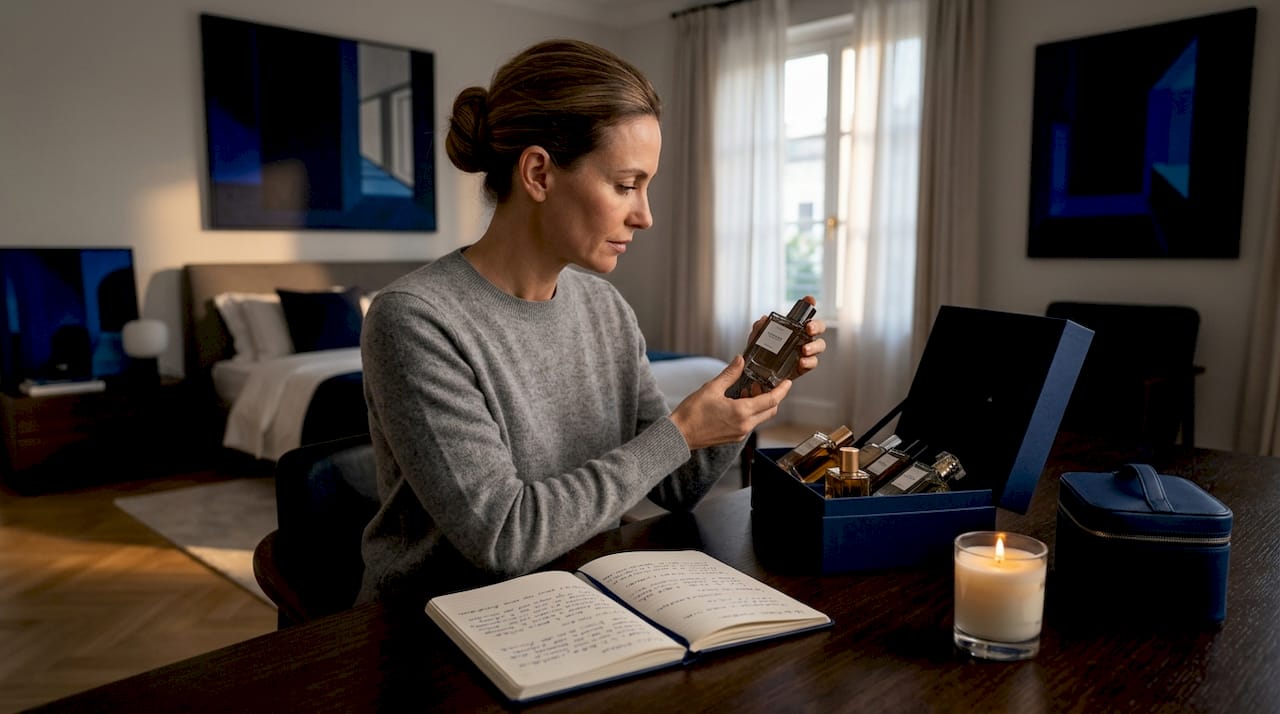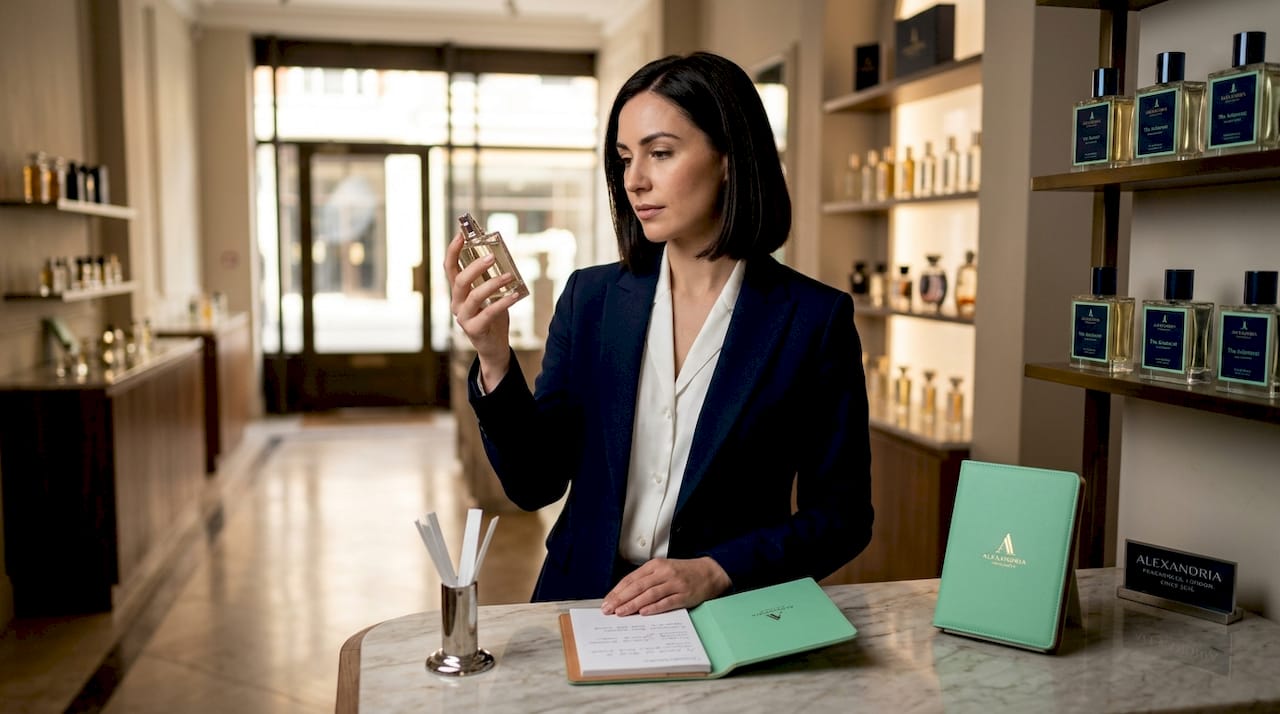
How to test perfume in store: a practical guide
TL;DR:
- To avoid regret, perfume testing in store requires limited testing with proper preparation, patience, and observation.
- Respect the full scent evolution by waiting between stages and applying fragrances only on pulse points without rubbing, on unscented skin.
Walking into a fragrance counter without a plan is one of the most reliable ways to leave with a bottle you will regret. The allure of luminous displays, insistent sales associates, and intoxicating blends in the air can easily override sound judgement. Knowing how to test perfume in store properly transforms that chaotic experience into something purposeful and pleasurable. This guide equips you with the exact method that fragrance connoisseurs use, from preparation through to the final purchase decision, so every bottle you bring home earns its place on your shelf.
Table of Contents
- What you need to prepare before testing perfume in store
- Step-by-step method to test perfume in store properly
- Common mistakes to avoid when testing perfume in store
- How to verify your perfume choice after testing in store
- The often overlooked art of patient perfume testing
- Discover our curated fragrance collections and expert guidance
- Frequently asked questions
Key Takeaways
| Point | Details |
|---|---|
| Limit your testing | Testing no more than three perfumes on your skin per store visit avoids olfactory fatigue and confusion. |
| Use blotters first | Start with blotter strips to screen perfumes by top notes before moving to skin testing. |
| Wait for dry-down | Give at least 15 to 60 minutes to judge the heart and base notes for a true scent preview. |
| Avoid rubbing | Never rub wrists after spraying as it disrupts the perfume’s molecular structure and scent evolution. |
| Verify with real wear | Test your chosen perfume in real-life conditions and on multiple days before buying for reliable results. |
What you need to prepare before testing perfume in store
Before you set foot in a fragrance boutique or department store counter, preparation is everything. Arriving without a clear approach is how shoppers end up testing twelve scents in twenty minutes, walking away confused, and buying on impulse rather than instinct.
How many perfumes should you test?
The single most important rule: limit testing to a maximum of 3 to 5 perfumes per store visit, with no more than three applied directly to skin. Beyond that, your olfactory system becomes saturated and loses the ability to distinguish one accord from another. The nose, extraordinary as it is, fatigues quickly under concentrated scent exposure.
What to bring and how to arrive
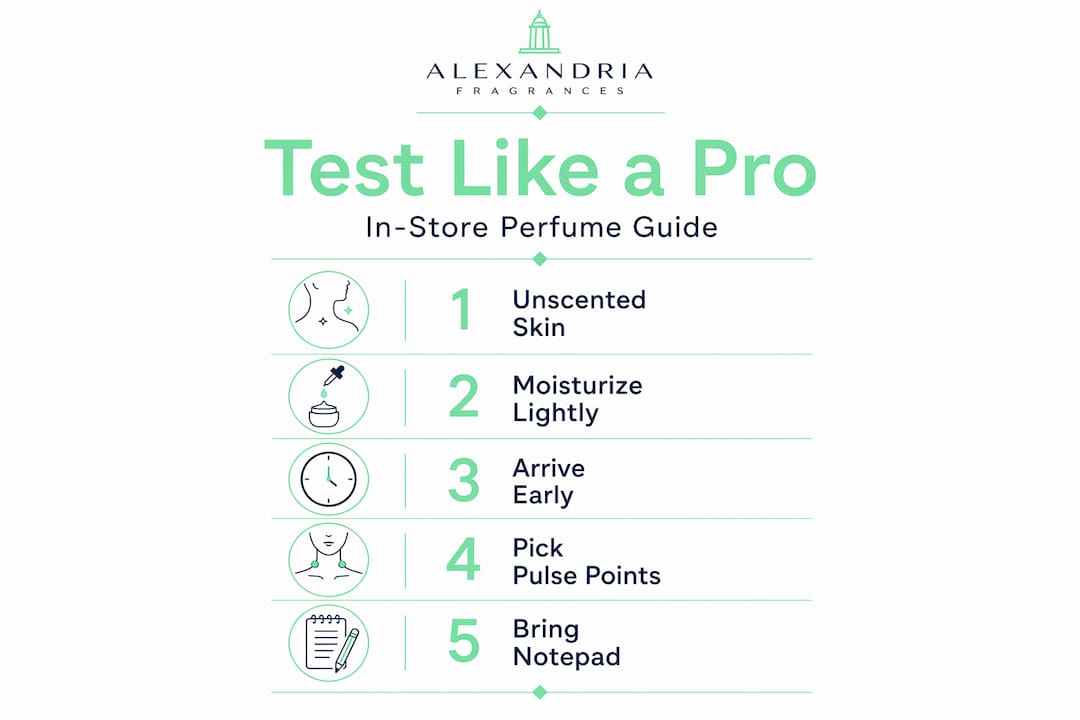
- Unscented skin: Shower with fragrance-free soap before your visit and avoid applying body lotion, deodorant, or cologne. Scented products introduce competing notes that skew results entirely.
- Moisturised skin: Paradoxically, well-hydrated skin holds fragrance better and allows for a more accurate read. Apply an unscented moisturiser the night before rather than on the morning of your visit.
- Blotter strips: Many stores provide these paper testing strips, but carrying your own ensures you always have clean ones available. They are invaluable for initial top-note impressions before committing to skin.
- A small notebook or your phone: Scent memory is surprisingly unreliable. Taking brief notes or photographing bottle names anchors your impressions for later comparison.
- A clear head: Avoid visiting when hungry, just after coffee, or after smoking. These conditions measurably reduce olfactory sensitivity and distort how accords register.
| Preparation step | Why it matters |
|---|---|
| Unscented skin | Eliminates competing fragrance interference |
| Moisturised skin | Enhances scent projection and longevity |
| Blotter strips | Preserves skin slots for best candidates |
| Note-taking | Anchors impressions for later comparison |
| Optimal timing | Ensures maximum smell sensitivity |
Pro Tip: Morning visits are ideal. Your nose is freshest before it has been exposed to the day’s accumulating scents, from coffee aromas to bus fumes. Fragrance specialists often assess new accords at the start of the working day for precisely this reason.
When you know you will be testing perfume on pulse points, preserving those spots for your shortlist matters enormously. Blotter strips act as your filtering tool, narrowing a long list down to worthy candidates before anything touches your skin.
Step-by-step method to test perfume in store properly
With your preparations in place, here is the expert step-by-step testing process to follow in-store. Think of it as a structured dialogue between you and each fragrance, one that demands patience and attention rather than a rushed verdict.
- Start with the blotter. Spray or dip a strip and smell it immediately. You are catching the top notes here, the first volatile impression that typically fades within five to fifteen minutes. These include citrus, green, and aldehydic elements.
- Set the blotter aside and return to it. After five minutes, smell again. The middle accord, often the true heart of the fragrance, begins to emerge. Floral, spicy, and woody characters tend to surface at this stage.
- Narrow to two or three candidates. From your blotters, select the fragrances that genuinely intrigue you, not just ones that seem inoffensive. These go on skin.
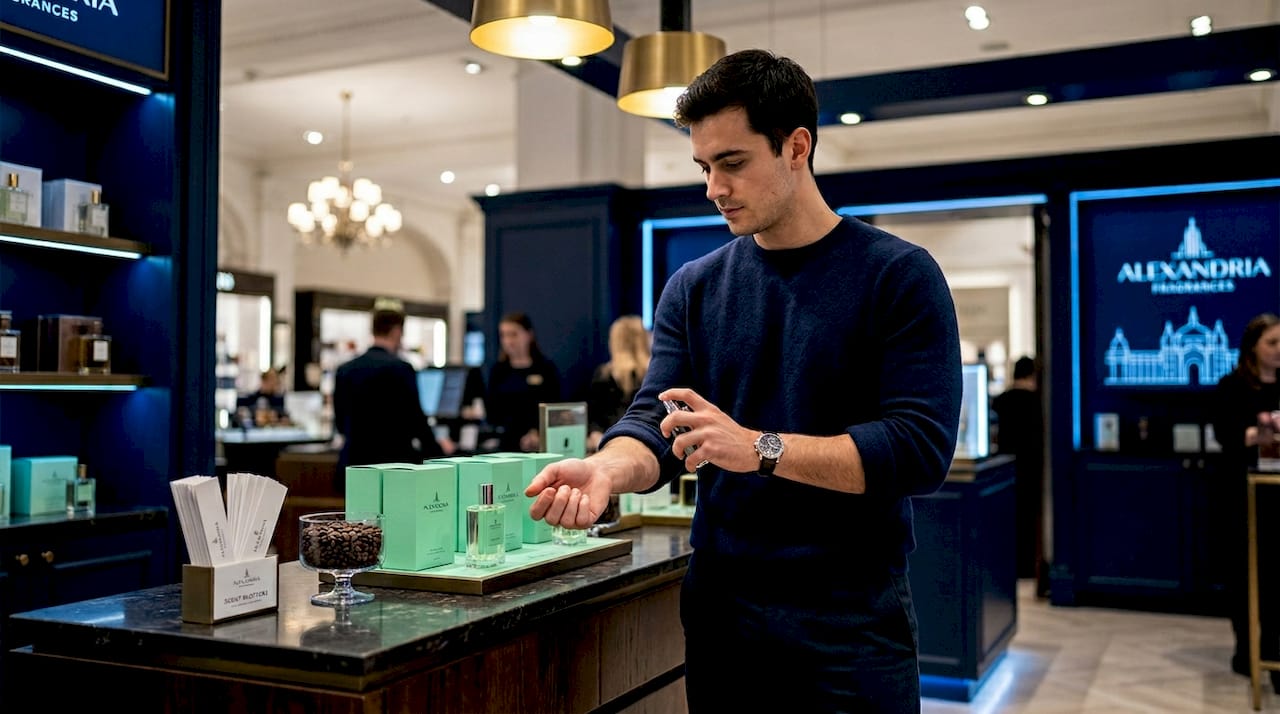
- Apply to pulse points, never rub. Wrists and inner elbows are classic choices. According to guidance on how to test perfume on skin, apply 1 to 2 sprays to clean pulse points, avoid rubbing, and wait 15 to 60 minutes to appreciate heart and base notes. Rubbing generates heat that accelerates evaporation and distorts the scent’s development. Simply spray and let it settle.
- Keep skin tests separated. One fragrance per arm is the rule. Testing two scents on the same wrist creates an unintentional accord that represents neither fragrance accurately.
- Wait and revisit. This is where most shoppers fail. The dry-down phase, when the base notes of musks, ambers, woods, and resins become dominant, only reveals itself after genuine waiting. Set a timer for thirty minutes and explore the store or step outside.
- Compare side by side. As you assess testing multiple perfumes effectively, pay attention to projection (how far the scent radiates from skin), wearability (whether it feels right on you), and emotional resonance.
The French, who have elevated fragrance to near-cultural doctrine, offer a useful model here. Parisian perfume testing etiquette emphasises unhurried assessment and respecting the scent’s full arc before forming an opinion. A judgement made at the top note is like reviewing a film based solely on the opening credits.
| Testing stage | What you are smelling | Time elapsed |
|---|---|---|
| Blotter, first impression | Top notes (citrus, green, fresh) | 0 to 2 minutes |
| Blotter revisited | Early heart notes emerging | 5 to 15 minutes |
| Skin, initial | Top into heart transition | 10 to 20 minutes |
| Skin, dry-down begins | Heart notes dominant | 20 to 40 minutes |
| Skin, base notes | Musks, woods, resins | 60 minutes and beyond |
Pro Tip: Smell the crook of your elbow rather than your wrist if you want a closer read of how a fragrance sits on your body temperature. The inner elbow has fewer skin variables and gives a cleaner result during extended skin wear.
Common mistakes to avoid when testing perfume in store
To ensure your testing is effective, here are pitfalls to watch for and practical tips to avoid them. Even seasoned shoppers fall into these traps, particularly under the gentle persuasion of an attentive sales environment.
- Testing too many at once. As noted earlier, beyond four or five scents your nose simply cannot render reliable judgements. Olfactory fatigue is real and sets in faster than most people expect.
- Judging from the bottle alone. The scent of perfume concentrate in an unopened bottle, or even the faint waft from a cap, tells you very little about how the fragrance will perform on your skin chemistry.
- Rubbing wrists together. This habit is deeply ingrained but genuinely counterproductive. As the BBC Travel guide on Parisian perfume notes clearly, rubbing breaks molecules and distorts scent development. Spray and leave.
- Buying under sales pressure. A skilled sales associate can create a convincing sense of urgency. Real confidence in a purchase only comes from extended wear, not a fifteen-second conversation beside the display.
- Skipping the dry-down entirely. The base notes of a fragrance are often its most distinctive and intimate facet. A scent that opens with a luminous, bergamot-laced burst may settle into something far richer or, conversely, far more generic. You will only know if you wait.
“The true character of a fragrance only reveals itself when the top notes have cleared and the heart and base emerge on your skin. Rushing this process is the most common, and most costly, mistake shoppers make.”
Pro Tip: If you find your nose becoming confused mid-visit, smell the inside of your own wrist (without any fragrance on it) or a clean cotton sleeve. This resets your palate without the overpowering effect of coffee beans, which are sometimes offered at counters but are not universally effective. You can read more on how to avoid perfume testing mistakes and refine your approach further.
How to verify your perfume choice after testing in store
After testing in store, here is how to confirm your perfume choice through extended wear assessments. In-store impressions are valuable but incomplete. The world outside the boutique introduces variables that a controlled counter environment simply cannot replicate.
- Request a sample or decant. Many quality fragrance counters will provide a small vial to take home. This is the gold standard of pre-purchase verification. Wear it on a normal day and observe how it interacts with your skin throughout the hours.
- Test on fabric. Spraying onto a scarf or the inside of a collar allows you to observe dry-down without skin chemistry as a variable. It will not reflect true longevity or personal resonance, but it does reveal the fragrance’s structural character in a more neutral environment. Guidance on extended perfume testing on fabric confirms this is a useful secondary method, not a replacement for skin wear.
- Test across multiple days and conditions. This is where many shoppers skip a vital step. Research confirms that testing the same perfume on different days and in varied conditions improves accuracy due to skin pH and weather variation. Your skin chemistry shifts with diet, hydration, hormones, and even temperature. A fragrance that dazzled on a cool morning may perform quite differently on a warm afternoon.
- Assess longevity and projection. Does the scent still register on your skin four hours later? Does it project confidently or cling close? These qualities determine whether a fragrance suits your lifestyle and is worth the investment.
- Trust your gut across multiple wears. If a fragrance genuinely delights you on three separate occasions, across different conditions, that is your answer. If doubt lingers, it is almost always telling you something useful.
| Verification method | Best for | Limitation |
|---|---|---|
| Sample or decant | Full wear experience | Not always available |
| Fabric test | Structural scent assessment | Misses skin chemistry |
| Multi-day skin wear | Accurate personal fit | Requires patience |
| Longevity check | Value for money assessment | Environment-dependent |
Discovering a fragrance’s true character is also about understanding verifying perfume longevity in real-world conditions rather than trusting the first impression alone.
The often overlooked art of patient perfume testing
There is a tendency, understandable in a busy retail environment, to treat fragrance testing as a task to complete rather than an experience to inhabit. Every step described in this guide, the preparation, the blotter sequence, the dry-down wait, is only as valuable as the patience with which you apply it.
The most refined fragrance enthusiasts do not approach an in-store visit with a shopping list mentality. They arrive open to discovery, unhurried, and alert. A morning visit with a fresh nose is not just a practical suggestion; it is a commitment to treating your senses with the respect they deserve. The expert perfume testing mindset begins before you even enter the store.
Here is the insight that few mainstream guides offer: over-sniffing is its own trap. Some shoppers, convinced they need to analyse a fragrance in extreme detail, end up neutralising their own ability to perceive it clearly. The nose is not a microscope. It works best when you smell briefly, step away, return, and let the impression settle naturally. Repeated, anxious smelling produces diminishing returns.
There is also the matter of emotional interference. When you are drawn to a bottle by its packaging, its name, or its association with a beloved designer, you are already primed to find it pleasing. This is where honest, dispassionate notes become invaluable. Write down what you actually smell, not what the marketing suggests you should. Does the accord feel like what it promises? Does the base feel warm and intimate or cold and fleeting?
Treating perfume testing as an experiential ritual rather than a checklist item changes the quality of the decision at the end. Shoppers who rush rarely find their signature scent in a single visit. Those who approach it as an evolving discovery, one that may unfold across two or three visits to the same counter, consistently report greater satisfaction with their final choice.
Discover our curated fragrance collections and expert guidance
Now that you are equipped with expert testing knowledge, allow Alexandria UK to support your journey with premium collections and guidance built specifically for fragrance lovers who value quality above all.
At Alexandria UK, every collection is curated with the same depth of expertise this guide reflects. Whether you are searching for your signature scent or exploring inspired alternatives to beloved luxury houses, our range offers a refined, accessible path to discovery. Our detailed fragrance testing guide deepens everything covered here, and our multiple perfume testing tips help you navigate a broader selection with confidence. Samples are available so you can extend the experience beyond the counter, on your terms, in your world.
Frequently asked questions
How many perfumes should I test on skin in one store visit?
Limit skin testing to no more than three perfumes per visit. Beyond three, your nose becomes overwhelmed and is no longer able to distinguish each fragrance’s development with any reliability, as recommended by fragrance shopping specialists.
Why should I avoid rubbing wrists after applying perfume?
Rubbing generates friction and heat that break the perfume’s molecular structure, accelerating the evaporation of top notes and preventing you from experiencing its true composition. Fragrance experts consistently cite this as the single most common mistake shoppers make at the counter.
How long should I wait after applying perfume before deciding?
Wait 15 to 60 minutes to appreciate the heart notes, and ideally up to several hours to fully experience the base notes and understand the fragrance’s true character and longevity.
Can I test perfume on clothes instead of skin?
You can, and it offers a useful secondary impression of the fragrance’s structural dry-down. However, fabric testing will not reflect your personal skin chemistry, so it should complement skin testing rather than replace it.
Why is it recommended to test the same perfume more than once?
Because your skin chemistry varies with hydration, diet, temperature, and hormones, a single test can give a misleading impression. Testing on different days accounts for these variables and gives a far more accurate picture of how the fragrance truly behaves for you.