
Pick a Fragrance That Suits You, UK: Profile First Test at Hour 2
The fastest route to a fragrance you will still love in a year is a three-step method: choose a scent profile, test two candidates properly on skin with set checkpoints, then verify with a week of decant wear before spending on a full bottle. Start today by picking your profile and ordering a discovery set or a travel atomiser for sampling. At Alexandriauk, Dave calls this profile → test → verify, and it works because it checks what a fragrance does on you at the two-hour mark, not what it promises on the box.
TL;DR:
- Testing fragrances on skin after proper blotter evaluation ensures you assess how it truly behaves with your body chemistry at the two-hour mark.
- Choosing a scent family and filtering notes in advance reduces the risk of buying a top-note-only fragrance that fades quickly or clashes with your preferences.
- A full week of daily wear testing of a decant helps confirm a fragrance’s longevity and suitability across different contexts before making a full purchase.
- Fragrance concentration impacts longevity more than brand labeling; dry skin may need higher concentrations like EDP or extrait for lasting power.
- Sampling discovery sets and using travel atomizers make it affordable and practical to build a tailored perfume wardrobe aligned with your lifestyle.
Table of Contents
- How to pick a fragrance profile before you even smell a bottle
- How do I test a perfume properly before buying?
- Does EDT, EDP or extrait actually matter for longevity?
- Matching your fragrance to season, occasion and daily life
- What is the best way to apply perfume so it lasts?
- The final buy/no-buy checklist
- Why a profile-first routine beats brand-first shopping
- Sample smart with Alexandriauk before you commit
- Sources
- FAQ
How to pick a fragrance profile before you even smell a bottle
Choosing a fragrance profile before you set foot near a counter saves you from the single most common buying mistake: falling for a beautiful top note that vanishes within the hour. A scent profile is simply the family of smells that consistently work on your skin and match your taste, and naming it first turns an overwhelming wall of bottles into a shortlist of five or six worth trying.
Most fragrances fall into a handful of broad families, each with a distinct sensory signature:
- Clean skin scents — soft musks, white florals, faint soap notes; understated and office-friendly.
- Fresh and citrus — bergamot, grapefruit, green herbs; energetic, best in warmer months.
- Woody — cedar, vetiver, sandalwood; grounded and versatile across seasons.
- Warm and gourmand — vanilla, tonka, caramel, spice; cosy and attention-grabbing.
- Dark floral — rose or tuberose paired with oud, leather or patchouli; intense and evening-leaning.
- Fruity-floral — peach, blackcurrant or pear layered over florals; youthful and approachable.
Once you have a family in mind, run a quick yes-note / no-note exercise: pick one note you always love (say, vanilla) and one you consistently reject (say, heavy patchouli). This single filter, recommended in GlamGeek’s UK signature perfume guide, eliminates a huge chunk of the market before you spend a penny on samples.
Climate matters too. British weather flattens sweet, resinous notes in damp winter air and amplifies them indoors once the central heating kicks in, so a fragrance that felt perfectly balanced in a shop in October can turn cloying by January. Building climate into your profile from the start avoids a wardrobe of bottles that only work half the year.
How do I test a perfume properly before buying?
Testing a fragrance in the wrong order is why so many bottles end up unworn in a drawer. The correct sequence is blotter first, then skin, and it exists for a reason: paper reveals the honest composition of a scent without your skin’s chemistry interfering, while skin testing shows you how that composition actually behaves once your body heat and oils get involved. Skip the blotter and you risk wasting a skin test on something that was never going to suit your profile anyway, as WhatScent’s step-by-step evaluation guide sets out clearly.
Once a blotter passes, move it to skin and track it at four checkpoints:
- Immediate — note the opening accord and whether it clashes with anything you already dislike.
- 30 minutes — the top notes should be settling into the heart; this is where you judge sweetness, spice or freshness levels.
- Two hours — the true test. What remains here is close to the fragrance’s real character.
- Five hours or more — the base note, the one that determines whether you will reach for this bottle again.
Pro Tip: Write a one-line note at each checkpoint, even just “still fresh, no complaints” or “gone sickly sweet.” You will not remember three fragrances’ worth of detail by the evening, and that scrap of paper is worth more than any sales assistant’s opinion.
Limit yourself to two scents on skin per session and three to four on blotters. Testing more than that saturates your nose within about half an hour, a state perfumers call olfactory fatigue. Take a 20-minute break in fresh air between fragrances to reset, and never test in a heavily scented shop environment where competing bottles muddy your read.
Does EDT, EDP or extrait actually matter for longevity?
Concentration decides how long a fragrance lasts and how loudly it projects, and getting this wrong is why some people assume they have “bad skin chemistry” when really they just bought the wrong format. Eau de toilette (EDT) carries the lowest concentration of perfume oil, giving a lighter scent that typically fades within three to five hours. Eau de parfum (EDP) sits higher on the scale, offering more depth and generally lasting through a full working day. Extrait de parfum, or pure perfume, holds the highest concentration and the longest wear, often stretching well into the evening from a single application, a hierarchy confirmed in The Fragrance World’s UK buyer’s guide.
Skin type shifts these expectations further:
- Dry skin burns through fragrance faster and benefits from EDP or extrait strength.
- Oily skin holds scent longer naturally, so even an EDT can perform well.
- Daily wear rarely needs more than an EDT or a modest EDP, both easier to layer without becoming overpowering.
- Evening or special occasions justify reaching for extrait, where richness and staying power matter more than restraint.
Matching your fragrance to season, occasion and daily life
A single bottle rarely covers every context in your calendar, and expecting it to is a common source of buyer’s regret. Warm gourmands that feel wonderful on a cold December evening can feel stifling on a humid July commute, while a crisp citrus that sings in summer often reads as thin and forgettable at a winter dinner.
A workable rotation structure removes the guesswork:
- One year-round signature — typically a woody or clean-skin scent versatile enough for office and casual wear.
- One seasonal option — fresh and citrus for summer, or warm and gourmand for winter.
- A day/evening split — lighter EDT for daytime, richer EDP or extrait for evenings out.
The Fragrance World’s buyer’s guide suggests most people are best served by two to four fragrances in rotation rather than a single do-everything bottle. A single signature still makes sense if your lifestyle is genuinely consistent, but anyone whose week swings between the gym, the office and Saturday night out will get more satisfaction from a small, deliberate wardrobe. For a fuller walkthrough of building that shortlist, Alexandriauk’s step-by-step guide to choosing a new perfume is worth reading alongside this one.
What is the best way to apply perfume so it lasts?
Application technique often matters more than the bottle itself. Moisturise bare skin before you spray; hydrated skin holds fragrance molecules far better than dry skin, which lets scent evaporate within the hour. Spray pulse points from around 15 to 20 centimetres away rather than pressing the nozzle directly to skin, and resist the urge to rub your wrists together afterwards, since friction breaks down the top notes before they get a chance to develop properly.
- Moisturise unscented lotion into pulse points first.
- Spray from a short distance, never point-blank.
- Leave sprayed skin alone; do not rub or pat.
- Use fabric or hair sparingly, since fragrance clings there for hours and can turn heavy by evening.
- Cut back on quantity rather than adding more; three sprays of something well-chosen outlasts six sprays of confusion.
The most frequent mistake is overspraying to compensate for a scent that felt weak in a shop, which is usually a saturated-air illusion rather than a true reading of the fragrance. For a deeper technique breakdown, Alexandriauk’s guide on how to make perfume last all day covers layering and fabric application in more detail.
The final buy/no-buy checklist
Before any full bottle leaves your basket, run through this short list. It exists to catch the two things that cause the most regret: buying on a top note alone, and duplicating a scent you already own.
- Check the base at two hours. If what remains on skin at that point doesn’t excite you, the opening never will either.
- Picture it in real life. Would you wear this to your actual Tuesday, not an imagined glamorous evening?
- Compare it to your current collection. A new bottle that smells like something already in your cabinet is money wasted.
- Wear a decant for a full week. Test it across a work day, a gym session and a night out before committing to full size.
- Set a price ceiling first. Discovery sets and inspired-by alternatives let you test the profile affordably before you decide whether the full-price original is worth it.
Why a profile-first routine beats brand-first shopping
Dave has watched the same mistake play out for years: someone falls for a fragrance’s opening ten minutes in a shop, buys the full bottle, then never wears it again once the top notes fade into something unrecognisable. Profile-first shopping fixes that because it forces you to name what you actually want before a beautiful bergamot note can talk you out of your own judgement.
The two-hour checkpoint matters more than any other, because the base note is what you will actually be wearing for most of the day and what determines whether you reach for that bottle again next week. Everything before that point is marketing. If you want the extended version of this reasoning, Alexandriauk’s guide on testing multiple perfumes for lasting quality walks through the session mechanics in more depth.
— dave
Sample smart with Alexandriauk before you commit
Running this whole method properly costs almost nothing if you sample the right way, and that is exactly where Alexandriauk earns its keep against the guesswork of counter-hopping. The Discovery Set gives you a curated shortlist of decants built for exactly the week-long wear test this article recommends, letting you check base notes across different days and contexts before spending on a full bottle.
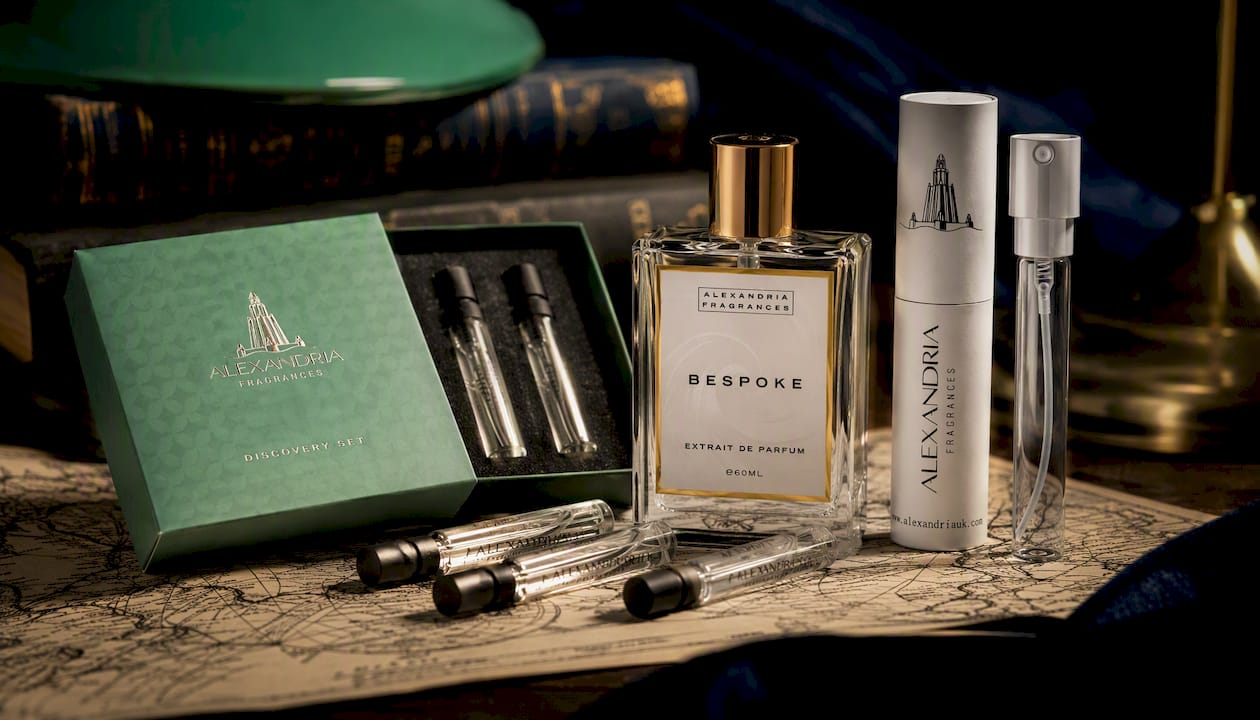
If your yes-note and no-note exercise keeps landing you between two families with nothing quite matching, the Bespoke service builds a tailored blend around the base note you actually want to wear, rather than forcing a compromise off the shelf. And for the practical side of testing on the move, the EMPTY Travel Atomiser, at £8.99, lets you carry a decant through a working week, a gym session and a night out without lugging a full bottle around. Start with a discovery set this week and run the two-hour checkpoint on your shortlist before you buy anything full size.
Sources
- How to Evaluate a Perfume Step by Step | WhatScent
- How to choose a signature perfume (UK guide) - GlamGeek
FAQ
How do I choose the right fragrance for me?
Name a scent profile using a yes-note and a no-note, test no more than two candidates on skin with blotters first, then wear a decant for a week before buying a full bottle.
What is the 5 spray rule?
There’s no single fixed rule, but a widely used guideline is two to three sprays on pulse points for daily EDT wear, rising to four or five only with lighter concentrations or in cooler weather when projection fades faster.
How do I find my signature scent?
Focus on what remains on your skin at the two-hour mark rather than the opening notes, since the base note is what you will actually be wearing for most of the day and what determines repeat wear.
What is the number one best smelling perfume?
There is no single best fragrance; the right choice depends entirely on your scent profile, skin chemistry and lifestyle, which is exactly why a profile-first testing method matters more than any bestseller list.