

How to Identify Quality Perfume: A Step-by-Step Guide
Choosing a quality perfume sounds simple until you realise there are over 30,000 new fragrances launched globally every year and countless brands competing for your attention. Most people go straight for a pretty bottle or a famous logo thinking they have found the real deal. Oddly, the secret to finding an exceptional fragrance has little to do with flashy packaging and everything to do with what you cannot see at first glance.
Table of Contents
- Step 1: Research Renowned Perfume Brands
- Step 2: Examine the Perfume Bottle Design
- Step 3: Test Scent on Skin Before Purchasing
- Step 4: Investigate the Fragrance Notes and Composition
- Step 5: Assess Longevity and Sillage of the Perfume
Quick Summary
| Key Point | Explanation |
|---|---|
| 1. Research renowned perfume brands | Understanding established brands helps distinguish high-quality fragrances from lower-quality options. |
| 2. Assess bottle design for quality indicators | Examine materials, craftsmanship, and ergonomics, as they signal the perfume’s overall excellence. |
| 3. Test scent on skin before buying | Skin chemistry affects fragrance; testing reveals how a scent truly develops and lasts on you. |
| 4. Investigate fragrance notes and composition | Learn about the structure of top, heart, and base notes to appreciate the craftsmanship behind the scent. |
| 5. Measure perfume’s longevity and sillage | Observe how long the fragrance lasts and its scent trail to evaluate quality and overall experience. |
Step 1: Research Renowned Perfume Brands
Identifying quality perfume begins with understanding the landscape of renowned brands and their reputation in the fragrance world. Research serves as your foundational strategy to distinguish exceptional perfumes from mediocre alternatives. By systematically exploring established perfume houses, you develop a refined understanding of what constitutes genuine quality in fragrance creation.
Understanding Brand Heritage and Expertise
Renowned perfume brands often have generations of expertise behind their formulations. Exploring luxury perfume heritage reveals how longstanding brands maintain rigorous standards in scent development. Look for brands with consistent recognition in professional fragrance circles, paying attention to their historical commitment to quality ingredients and innovative techniques.
When researching brands, focus on several key indicators of reputation. Perfume awards provide credible third party validation of exceptional fragrances. Professional perfumery associations and international fragrance competitions annually recognise outstanding creations, offering consumers reliable benchmarks for quality. Additionally, examine the brand’s transparency regarding ingredient sourcing, production methods, and olfactory craftsmanship.
Experts recommend creating a structured research approach. Start by identifying top tier perfume houses known for consistent quality. Consider brands with long standing reputations like Guerlain, Chanel, and Creed. Investigate their manufacturing processes, ingredient quality, and professional reviews from respected fragrance critics. Learn more about identifying unique scent combinations that distinguish premium fragrances from standard offerings.
Remember that genuine quality transcends marketing hype. Look beyond flashy packaging and celebrity endorsements. True perfume excellence emerges through meticulous ingredient selection, balanced composition, and consistent performance. Your research should ultimately help you distinguish authentic craftsmanship from superficial branding.
The following table summarises each main step in the process of identifying a quality perfume, highlighting main actions and what you should aim to discover.
| Step | Main Action | Key Outcome |
|---|---|---|
| 1 | Research renowned perfume brands | Distinguish authentic, high-quality brands from standard options |
| 2 | Examine perfume bottle design | Identify indicators of craftsmanship and manufacturing quality |
| 3 | Test scent on skin | Assess how the fragrance develops with your own chemistry |
| 4 | Investigate fragrance notes & composition | Understand structure, quality, and intended scent journey |
| 5 | Assess longevity and sillage | Evaluate duration and projection for overall performance |
Step 2: Examine the Perfume Bottle Design
The perfume bottle represents more than aesthetic appeal it serves as a critical indicator of potential fragrance quality. Professional perfume enthusiasts understand that bottle design communicates brand integrity and craftsmanship, offering subtle yet significant insights into the product’s overall excellence.
Assessing Design Quality and Brand Commitment
When examining a perfume bottle, consider multiple visual and tactile elements that signal authentic quality. Glass composition provides the first meaningful assessment. High quality perfumes typically feature thick, precisely crafted glass with clean edges and substantial weight. Run your fingers along the bottle’s surface searching for consistent smoothness and precision in manufacturing. Imperfections like irregular seams, uneven glass thickness, or rough finishing suggest potential compromises in production standards.
Explore unique packaging design strategies that distinguish premium fragrances. Look for design elements that demonstrate meticulous attention to detail. Premium brands invest significant resources in creating bottles that reflect their commitment to excellence. Examine the bottle cap mechanism carefully solid metallic caps with precise threading indicate superior manufacturing. Lightweight or poorly constructed caps might signal lower quality production processes.
Color and transparency also communicate important information about potential fragrance quality. Crystal clear glass allows subtle examination of the liquid’s true colour, while tinted or opaque bottles might obscure ingredient visibility. Professional perfumers recommend observing how light interacts with the bottle subtle refractions and balanced colour saturation hint at sophisticated formulation.
Beyond visual inspection, consider the bottle’s ergonomic design. Quality perfume bottles balance aesthetic appeal with practical functionality. They should feel comfortable when held, with balanced weight distribution and intuitive spray mechanisms. Cheap imitations often feature clunky designs that compromise user experience. A genuine quality perfume bottle feels like a precision instrument smooth, well constructed, and thoughtfully engineered.
The table below organises visual and tactile bottle features to examine while assessing perfume bottle quality, along with what each feature reveals about the perfume.
| Bottle Feature | What to Check | Quality Indicators |
|---|---|---|
| Glass composition | Thickness, smoothness, weight | Sturdy, precise glass with no rough edges or seams |
| Cap mechanism | Material, threading, weight | Solid, metal, smooth action, fits securely |
| Colour and clarity | Transparency, evenness | Crystal clear or evenly tinted with visible liquid |
| Ergonomics | Comfort in hand, weight balance | Feels balanced and easy to handle |
| Manufacturing finish | Seams, edges, imperfections | Consistent, refined, and carefully finished surfaces |
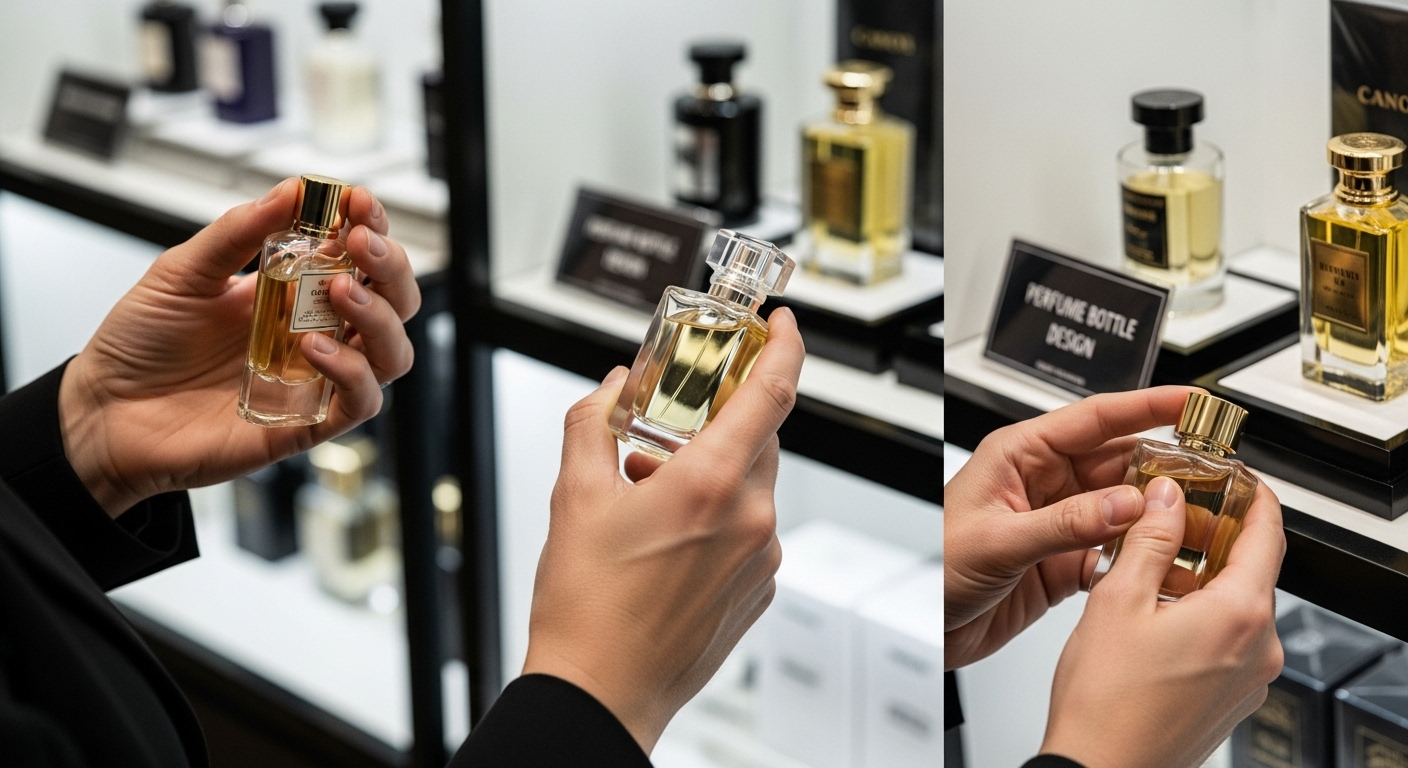
Finally, research the brand’s reputation for packaging design. Some perfume houses have decades of design heritage, with bottles becoming iconic representations of their brand identity. Your careful examination transforms bottle selection from a superficial choice into an informed assessment of potential fragrance excellence.
Step 3: Test Scent on Skin Before Purchasing
Testing a perfume directly on your skin represents the most critical step in determining authentic fragrance quality. Skin chemistry transforms perfume, revealing nuanced characteristics impossible to detect through bottle examination or initial spray.
This personal interaction allows you to understand how a fragrance truly performs and interacts with your unique biochemical composition.
Mastering the Art of Skin Testing
Begin by preparing your skin for accurate fragrance assessment. Choose a neutral testing area like the inner wrist or elbow, areas with consistent temperature and minimal external interference. Clean the selected skin region with unscented soap to remove any residual fragrances or oils that might compromise the testing process. Learn about perfume testing techniques that professionals use to evaluate scent performance.
When applying the perfume, use a single light spray approximately 10 centimetres from your skin. Avoid rubbing the fragrance, as this common mistake breaks down molecular structures and alters the perfume’s genuine scent profile. Instead, allow the fragrance to settle naturally, observing how it interacts with your skin over several minutes. Professional perfumers recommend waiting at least 15 minutes to experience the fragrance’s complete olfactory journey.
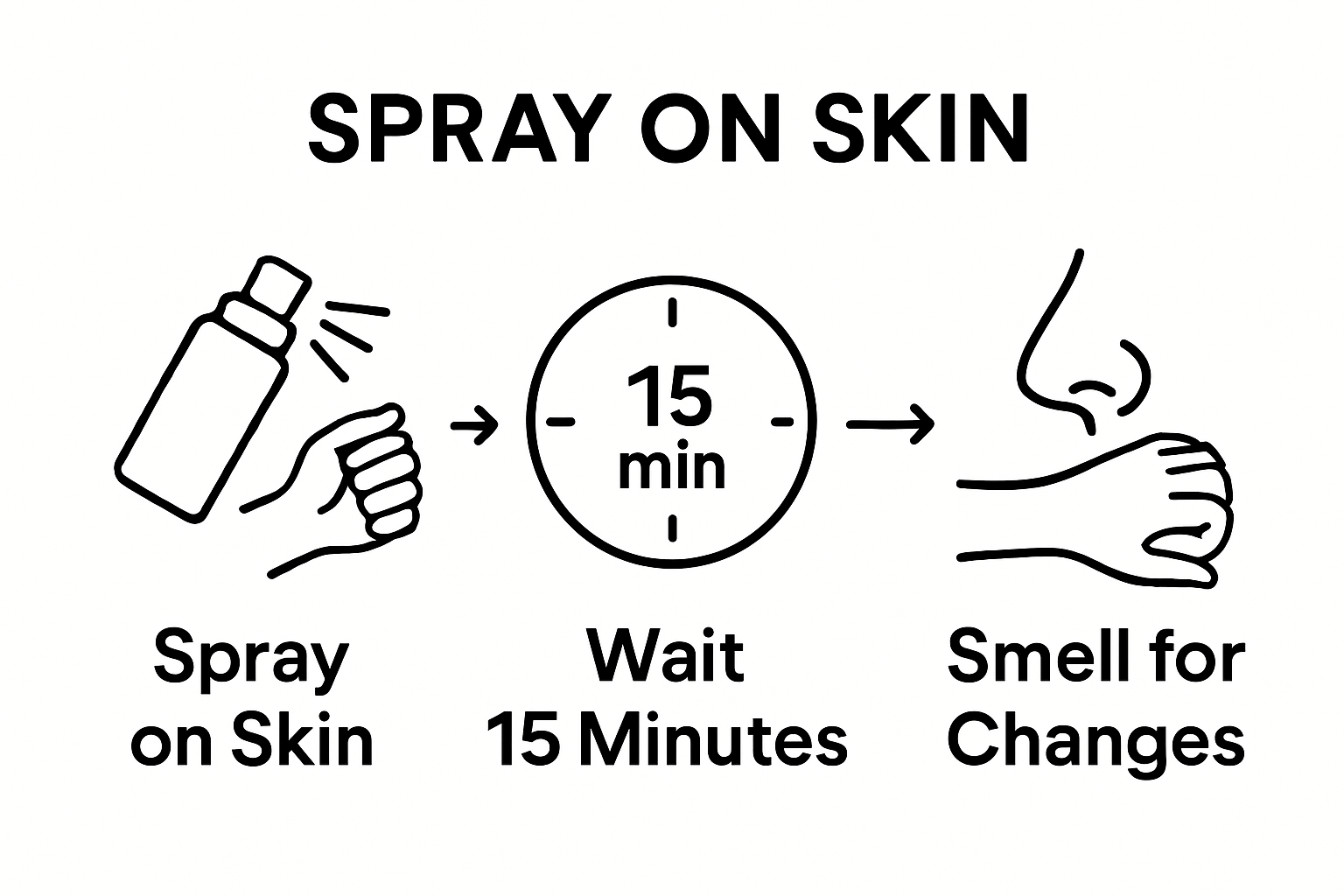
Carefully monitor the perfume’s evolution through three distinct phases. The initial top notes emerge immediately, providing a brief introduction to the fragrance. Within 30 minutes, middle notes develop, revealing the perfume’s core character. After approximately two hours, base notes emerge, showcasing the fragrance’s most profound and lasting impression. Quality perfumes demonstrate smooth, harmonious transitions between these stages, without jarring or abrupt changes.
Pay close attention to how the fragrance responds to your individual skin chemistry. Some perfumes might smell pleasant initially but transform unpleasantly on certain skin types. Watch for potential allergic reactions or skin irritations, which could indicate lower quality ingredients. A genuine high quality perfume should feel comfortable, with a balanced projection that neither overwhelms nor disappears too quickly.
Remember that personal preference remains paramount. A technically perfect perfume might not suit your individual taste. Trust your sensory experience, and do not hesitate to request additional testing samples. Multiple testing sessions across different times and environments will provide a comprehensive understanding of the fragrance’s true character.
Step 4: Investigate the Fragrance Notes and Composition
Understanding a perfume’s composition represents the pinnacle of quality assessment. Fragrance notes tell a complex story of craftsmanship, revealing the perfumer’s skill in blending diverse aromatic elements into a harmonious sensory experience. Each perfume consists of intricate layers that unfold dynamically across time, demanding careful and educated investigation.
Decoding the Fragrance Composition
Begin by requesting a detailed ingredient list from the retailer or examining the packaging carefully. Explore the fundamental structure of fragrance notes to develop a systematic approach to analysis. Professional perfume enthusiasts understand that quality fragrances demonstrate sophisticated layering across three critical stages: top notes, heart notes, and base notes.
Top notes represent the initial impression, typically light and volatile compounds that evaporate quickly. Citrus, herbal, and fresh green elements often characterize this layer. Within 15 minutes, these initial scents transition into heart notes, which form the perfume’s core character. High quality fragrances showcase smooth, almost imperceptible transitions between these layers. Pay attention to how smoothly these notes interact observe whether the fragrance feels disjointed or presents a cohesive olfactory narrative.
Heart notes typically feature more complex botanical essences like floral, spice, or fruit extracts. These middle notes persist for several hours, providing the perfume’s fundamental personality. Base notes emerge last, representing the deepest and most enduring aromatic elements. Premium fragrances demonstrate remarkable depth in their base notes, with rich ingredients like sandalwood, vanilla, or musk creating a lasting impression.
Quality can be assessed through several key indicators. Authentic high end perfumes utilize natural essential oils and complex molecular structures. Watch for ingredients that suggest meticulous sourcing natural botanical extracts, rare spices, and precisely balanced synthetic molecules. Cheap perfumes often rely on generic, mass produced fragrance chemicals that lack nuance and sophistication.
Remember that ingredient quality trumps quantity. A perfume containing fewer, more precisely selected ingredients often outperforms complex formulations with numerous mediocre components. Trust your sensory experience, comparing how the fragrance evolves on your skin against the promised composition. Genuine quality reveals itself through balanced, harmonious transformation that feels intentional and expertly crafted.
Step 5: Assess Longevity and Sillage of the Perfume
Longevity and sillage represent the most critical technical indicators of a perfume’s genuine quality. Longevity measures how long a fragrance remains detectable, while sillage describes the trail and projection of the scent around the wearer. Professional perfume enthusiasts understand that these characteristics reveal far more about a fragrance’s composition than initial impressions.
Measuring Fragrance Performance
Discover strategies for maximizing perfume longevity by developing a systematic testing approach. Begin your assessment by applying the perfume under controlled conditions. Choose a clean skin area with minimal external interference, preferably after a shower when skin is slightly moisturised but not oily. Premium fragrances demonstrate consistent performance across multiple hours, typically maintaining detectable notes for six to eight hours.
Track the perfume’s performance meticulously. Note how the scent transforms during different stages of wear. Quality fragrances maintain a balanced projection without becoming overwhelming or disappearing too quickly. Premium perfumes create a subtle yet consistent aromatic presence that remains detectable without demanding constant reapplication. Pay attention to how the fragrance interacts with your individual body chemistry some variations are normal, but significant deviation might indicate lower quality ingredients.
Sillage represents the perfume’s atmospheric presence the invisible scent trail surrounding the wearer. Exceptional fragrances create a delicate balance between being noticeable and intrusive. Stand near a neutral observer and ask for honest feedback about the perfume’s projection. High quality perfumes maintain a consistent sillage that allows others to appreciate the scent without feeling overwhelmed. Cheaper fragrances often have harsh, abrupt projections that feel artificial and unrefined.
Consider environmental factors during your assessment. Temperature, humidity, and personal activity levels can influence fragrance performance. Conduct multiple tests across different settings to develop a comprehensive understanding of the perfume’s genuine characteristics. Remember that skin moisture, diet, and individual biochemistry play significant roles in how a fragrance performs.
Ultimately, true quality reveals itself through consistent, harmonious performance. A superior perfume should feel like a natural extension of your personal essence, creating an elegant and sophisticated olfactory experience that remains sophisticated throughout its wear cycle.
Discover Quality Perfume Without the Guesswork
Do you ever feel overwhelmed trying to tell the difference between a real quality perfume and a flashy imitation? When every bottle promises excellence but only a few deliver on scent, longevity, and craftsmanship, finding the right fragrance can feel impossible. At Alexandria UK, we understand the pain of buying perfume that fades too quickly or never quite fits your personality. That is why our collection is inspired by the world’s most iconic fragrances, with a strong focus on quality and authenticity. Our team handpicks each scent using methods described in the article such as careful note blending and rigorous bottle design standards, so you can shop with confidence.
Ready to experience a better way to discover your signature scent? Visit Alexandria UK today and explore our expertly crafted perfumes. Try our unique fragrances risk-free and see why so many people trust us to deliver lasting quality every time. The perfume that truly fits your taste is only a click away.
Frequently Asked Questions
How can I determine the quality of a perfume brand?
Identifying quality perfume brands involves researching their heritage, expertise, and recognition in the fragrance industry. Look for brands with a long-standing reputation, credible perfume awards, and transparency in ingredient sourcing and production methods.
What should I look for when examining a perfume bottle?
When examining a perfume bottle, assess the glass composition for thickness and smoothness, check the bottle’s cap mechanism for precision, and observe colour clarity. Ergonomic design and attention to detail are also key indicators of a quality perfume bottle.
Why is it important to test perfume on skin?
Testing perfume on skin is crucial as skin chemistry can significantly alter how a fragrance smells. This allows you to evaluate its evolution through different notes and observe how it interacts with your unique biochemistry, which provides insight into its true quality.
What are the key indicators of perfume longevity and sillage?
Longevity indicates how long a perfume remains detectable on the skin, while sillage describes the scent trail around the wearer. Quality fragrances should maintain a balanced projection without being overwhelming and last a significant duration, typically several hours.


