One minute lab tested routine to make your perfume last all day
The fastest way to extend perfume longevity is to layer it onto well-moisturised skin, mist it onto fabric and hair rather than rubbing it into your wrists, and reach for an eau de parfum or oil concentration whenever wear time matters. Store the bottle away from heat and light. As the Good Housekeeping testing lab and formulator Karen Gilbert both confirm, technique matters as much as the fragrance itself, and this article builds every recommendation below around that principle.
TL;DR:
- Perfume lasts longer when applied on well-moisturized skin and sprayed onto fabric or hair, especially when layering matching or unscented products.
- Concentration tiers significantly influence longevity, with eau de parfum lasting up to eight hours and extrait potentially lasting into the next day.
- Proper storage in cool, dark places and sealing bottles prevents scent degradation caused by heat, light, and air exposure.
- Light, volatile ingredients like citrus evaporate quickly, so waiting at least thirty minutes before judging a fragrance’s longevity is essential.
- Reapplication mid-day with a travel spray and avoiding wrist rubbing can extend scent wear and maintain freshness throughout the day.
Table of Contents
- How to get your perfume to last longer: the application routine
- Which perfume concentration lasts the longest?
- Storing your bottles to protect potency
- Why these tips actually work
- Your one-minute morning fragrance checklist
- Dave’s expert notes on the mistakes people repeat
- Shop the fix: travel top-ups and long-wearing fragrances
- Sources
- FAQ
How to get your perfume to last longer: the application routine
Longevity begins before the spray even leaves the atomiser. Skin that is dry, tight, or freshly cleansed with nothing on it behaves like blotting paper for fragrance oils, letting the scent evaporate almost as quickly as it lands. Hydrated skin, by contrast, holds onto those aromatic molecules and lets them unfurl gradually, which is precisely why perfumers and beauty labs alike treat moisture as the foundation of any long-wear strategy.
Follow this order for the best results:
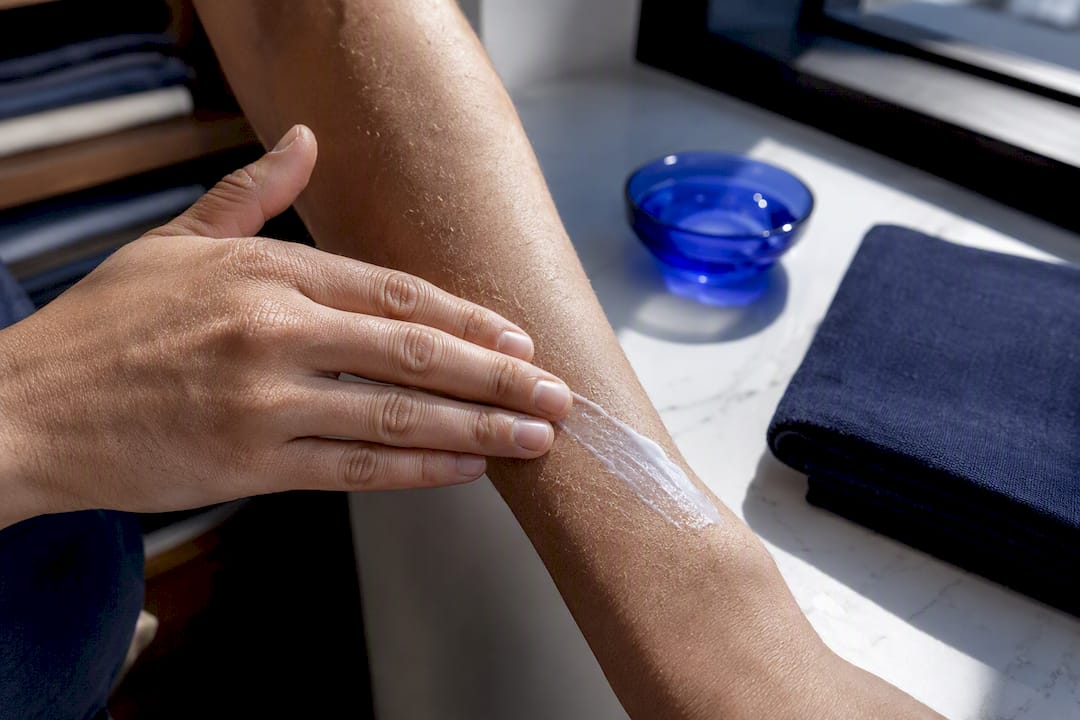
- Cleanse and hydrate. Apply an unscented moisturiser or a light facial oil straight after showering, while skin is still slightly damp.
- Spray while skin is warm. Warmth opens pores and encourages the fragrance to bloom rather than sit on the surface.
- Target the pulse points. Wrists, the base of the throat, behind the ears, and the inner elbows generate heat that helps diffuse the scent throughout the day.
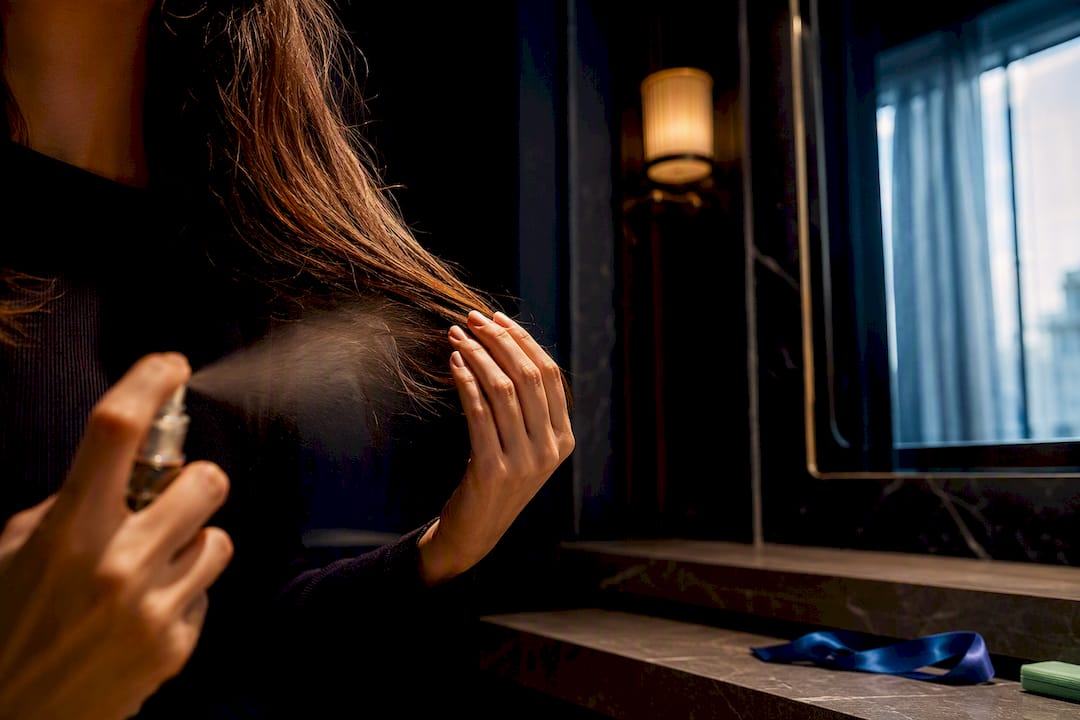
- Mist fabric and hair from a distance. A light spritz on a scarf, coat lapel, or the ends of your hair from around 20 centimetres away creates a scent trail that skin alone cannot match, since textiles and hair fibres act as slow-release reservoirs.
- Resist the urge to rub. Never rub your wrists together after spraying; friction breaks down delicate top notes and speeds up fading, according to Good Housekeeping’s testing lab.
For layering, pair an unscented or matching-scented body lotion with your perfume for a rounder, longer-lasting result. Matching families (a vanilla lotion under a gourmand fragrance, for instance) reinforces the composition, while a neutral base simply extends wear without altering the character.
Oily skin naturally clings to fragrance for longer, so those with drier skin should moisturise more generously and consider reapplying by mid-afternoon rather than expecting a single application to carry them through.
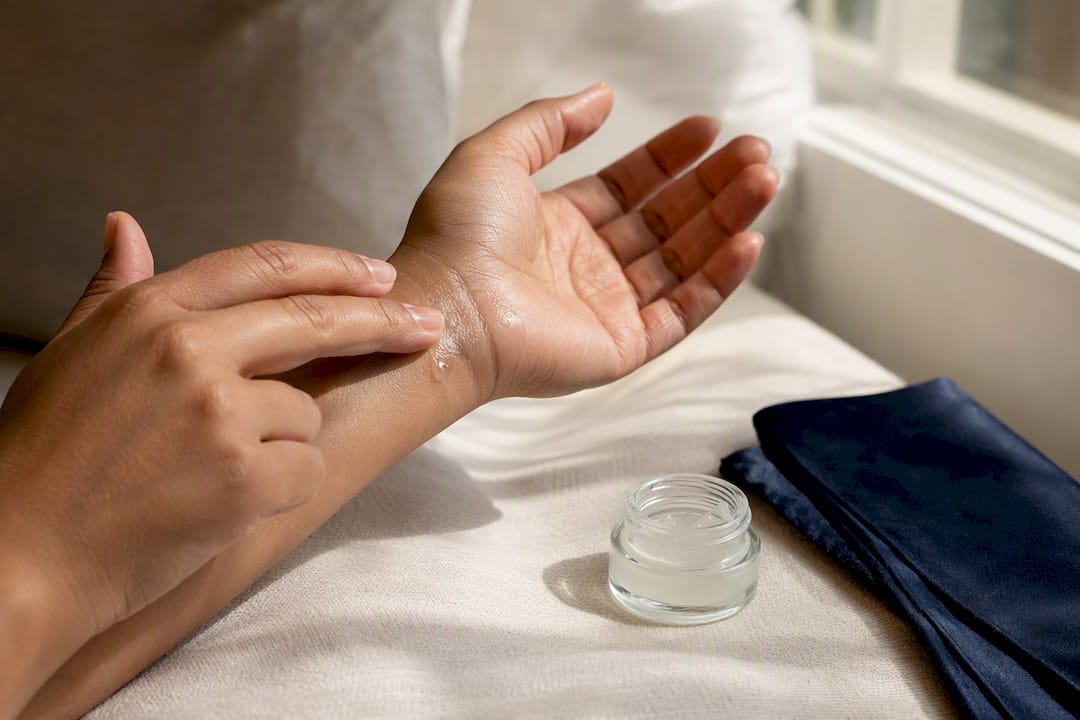
Pro Tip: Dab a small amount of unscented Vaseline onto pulse points before spraying. The petroleum jelly creates a light barrier that slows evaporation, giving oil-loving fragrance molecules something to cling to rather than dissipating straight into the air.
Which perfume concentration lasts the longest?
Concentration determines far more of a fragrance’s staying power than most shoppers realise. The percentage of aromatic oil in the bottle dictates both intensity and how many hours the scent lingers, and understanding the tiers helps you buy smarter rather than reapply constantly.
- Eau de Cologne (EDC): roughly 2 to 4% oil concentration, typically lasting two hours or less.
- Eau de Toilette (EDT): around 5 to 15%, generally lasting three to five hours.
- Eau de Parfum (EDP): usually 15 to 20%, often lasting six to eight hours or more.
- Parfum or Extrait: 20% and upwards, frequently lasting into the following day on fabric.
As a general rule, higher oil concentrations correlate with slower evaporation and longer wear, which is why extrait formulas feel so much richer hours after application than a citrus cologne ever could.
Base notes matter just as much as concentration. Musk, vanilla, oud, amber, and heavy resins are dense, slow-evaporating molecules that anchor a composition for hours. Citrus and light florals, by contrast, are volatile by nature; they announce themselves brilliantly for the first twenty minutes and then vanish. If you love a citrus-forward scent, look for an oil-based version or layer it over a warmer base to slow it down. When testing a new fragrance in-store, always wait at least thirty minutes before judging its true longevity. The first impression is rarely the final one.
Storing your bottles to protect potency
A beautifully formulated fragrance can lose its brilliance long before the bottle empties if it is stored carelessly. Heat, light, and air are the three enemies of a well-made perfume, quietly altering its molecular structure until the top notes turn sharp or the whole composition smells flat.
- Keep bottles cool and dark. A drawer, box, or wardrobe shelf away from windows is ideal; a steamy, sun-drenched bathroom shelf is the worst possible home for a fragrance.
- Leave the cap on and the bottle sealed. Every splash of air exposure introduces oxygen that gradually degrades the scent profile.
- Watch for warning signs. A change in colour, a sour or “off” note, or noticeably reduced projection all signal a fragrance past its prime, typically after two to three years of regular use once opened.
- Refill travel atomisers carefully. Decant only what you need for the week, and refill immediately after use rather than leaving the travel bottle half-empty and exposed to air for long stretches.
For a deeper look at cabinet organisation and long-term care, A guide on how to store perfume for lasting fragrance quality covers the finer details of humidity and bottle placement.
Why these tips actually work
Fragrance longevity comes down to chemistry, not luck. Lighter molecules with lower molecular weight evaporate first, which is why citrus and aldehydes vanish quickly while heavier materials linger. Academic research into deposition and tenacity shows that certain odorants, including synthetic musks like Galaxolide and the diffusive Hedione, retain measurable intensity across a full 48-hour window, far outlasting simpler top-note materials.
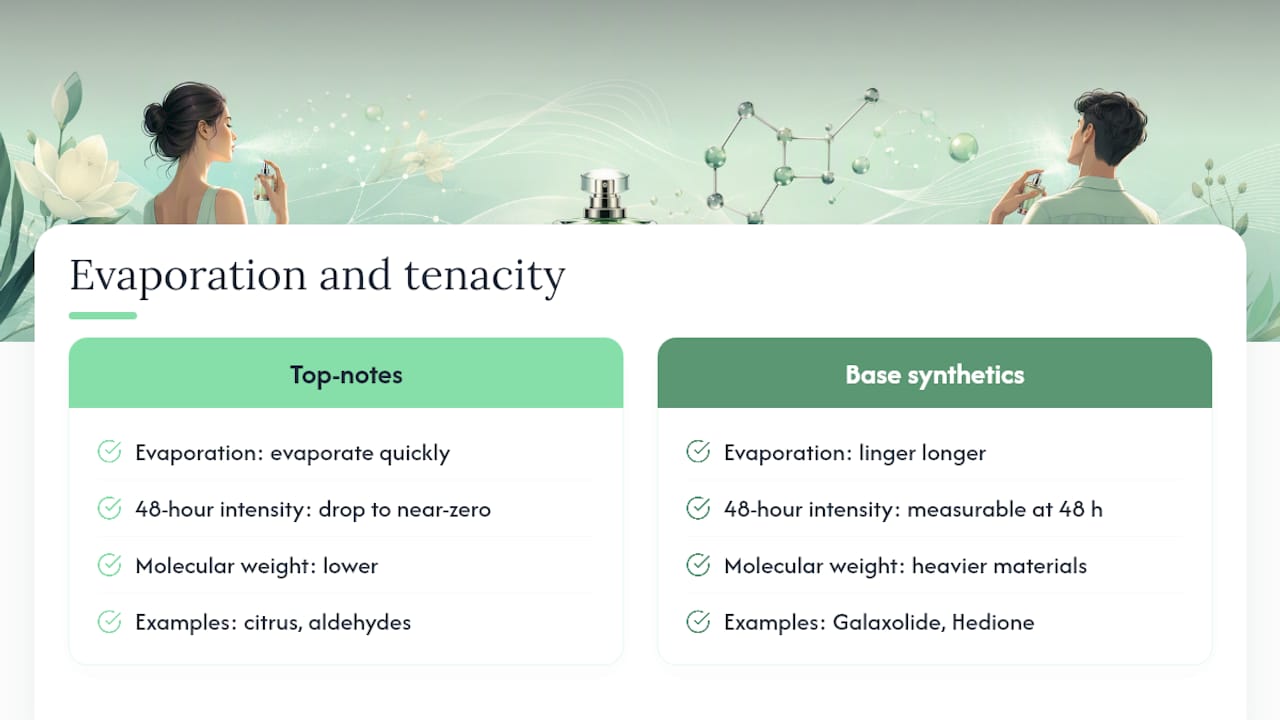
Skin hydration changes this equation directly. Well-moisturised, slightly oily skin holds aromatic molecules longer than dry skin, which is part of why the same fragrance behaves so differently from one person to the next. Fabric and hair extend this further, acting as physical reservoirs that release scent gradually rather than all at once, a dynamic the deposition research confirms holds true even after laundering or drying.
One caution worth repeating: there is no consumer-grade “fixative” you can safely add to a finished bottle. Perfumer Karen Gilbert notes that longevity has to be built into the formulation itself, through base materials and carrier choice, rather than bolted on afterwards.
Your one-minute morning fragrance checklist
- Moisturise skin (or apply a light oil) straight after your shower.
- Spray two sprays per pulse point from 15 to 20 centimetres away.
- Add one light mist to hair or a scarf for extra sillage.
- Skip the wrist rub. Let the fragrance settle naturally.
- Keep a travel spray in your bag for a quick top-up after lunch, as recommended in tips on how to stay fresh while traveling.
Swap lotion for oil if your skin runs dry, and always refill travel atomisers before they run bone dry.
Dave’s expert notes on the mistakes people repeat
The most common misstep Dave sees is over-spraying dry wrists and then rubbing them together, cancelling out the fragrance before it has a chance to develop. He recommends the smell-strip test: spray a strip, label it with the time, and check back hourly to learn how a scent actually behaves on your own skin rather than trusting the shop counter alone.
— dave
Shop the fix: travel top-ups and long-wearing fragrances
Even the best routine benefits from having the right tools on hand, and Alexandriauk built its range with exactly that in mind. The Travel Spray Refill Bottle (20ml) solves the mid-afternoon fade instantly, letting you carry a proper decant rather than an unreliable sample vial for those quick top-ups your desk drawer or handbag deserves.
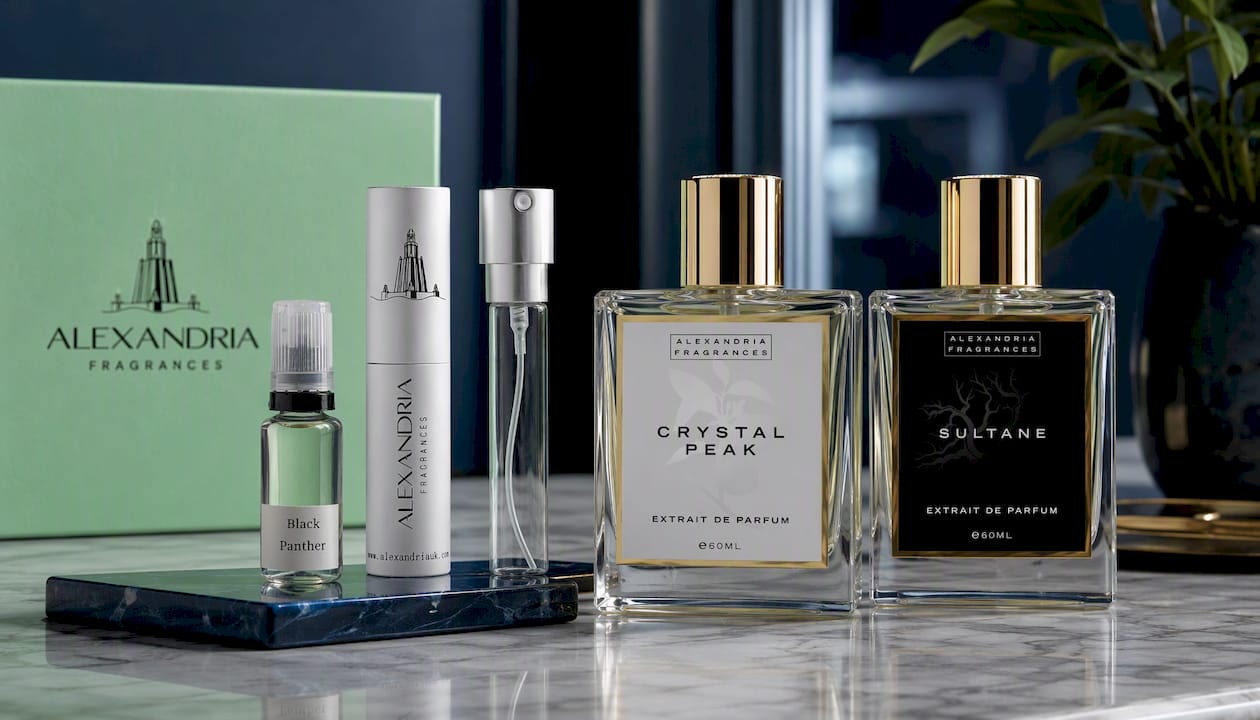
For fragrances built to go the distance from the first spray. Crystal Peak leans on warm, resinous depth that clings to skin for hours, while Sultane brings a rich, spiced sillage that rewards the layering technique covered above. Both sit comfortably in the eau de parfum territory that this guide recommends for genuine all-day wear. For the fuller picture on protecting your collection long after purchase, The Compendium rounds out storage guidance in far greater depth. Browse the current fragrance edit and add a travel spray to your next order to keep your signature scent within reach all day.
Sources
- How to make perfume last, according to experts — Good Housekeeping
- How to make a perfume last longer — Karen Gilbert
- Experimental study on deposition and long‑lastingness (semanticscholar PDF)
- Why do some perfumes last all day? — Perfume Cultures
FAQ
How can I get my perfume to last all day?
Moisturise your skin first, spray onto pulse points and fabric rather than rubbing it in, choose an eau de parfum or oil concentration, and keep a travel spray on hand for a midday top-up.
Does Vaseline actually help perfume last longer?
Yes. A thin layer of unscented Vaseline on pulse points creates a barrier that slows evaporation, giving fragrance oils more time to develop before they fade.
Why does my perfume smell go away so quickly?
Lighter, more volatile molecules such as citrus and aldehydes evaporate fastest, and dry skin accelerates the process further because there is nothing for the scent to cling to.
How do I put on perfume so I smell it all day?
Apply to warm, moisturised pulse points and lightly mist fabric or hair from about 20 centimetres away, then avoid rubbing the skin afterwards so the top notes stay intact.