How do you make perfume last all day: a simple routine
TL;DR:
- A quick morning perfume routine involves moisturising, applying petroleum jelly on pulse points, and spraying fragrance without rubbing. Using high oil concentration perfumes and anchoring with base notes extend lasting power, especially when applied to warm pulse points. Proper storage away from heat and light, along with layering techniques, further enhance fragrance longevity and projection.
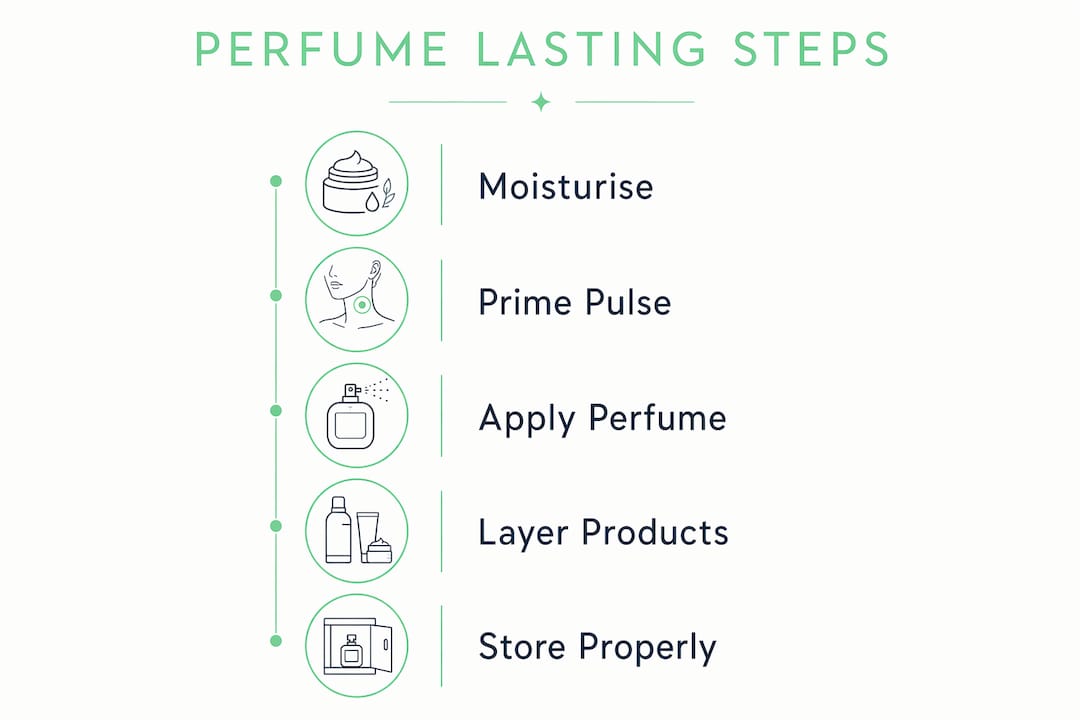
A short morning routine, three science-backed techniques, and the right fragrance concentration will keep your scent perceptible from the first meeting to the last. Moisturise first, prime pulse points with a thin layer of petroleum jelly (Vaseline), spray your eau de parfum (EDP) two to four times without rubbing, and carry a travel atomiser for discreet top-ups. That is the core of it. The sections below explain why each step works and how to refine it for your skin and lifestyle.
Your quick-start routine:
- Apply an unscented moisturiser to pulse points immediately after showering
- Dab a small amount of petroleum jelly on those same points and let it settle
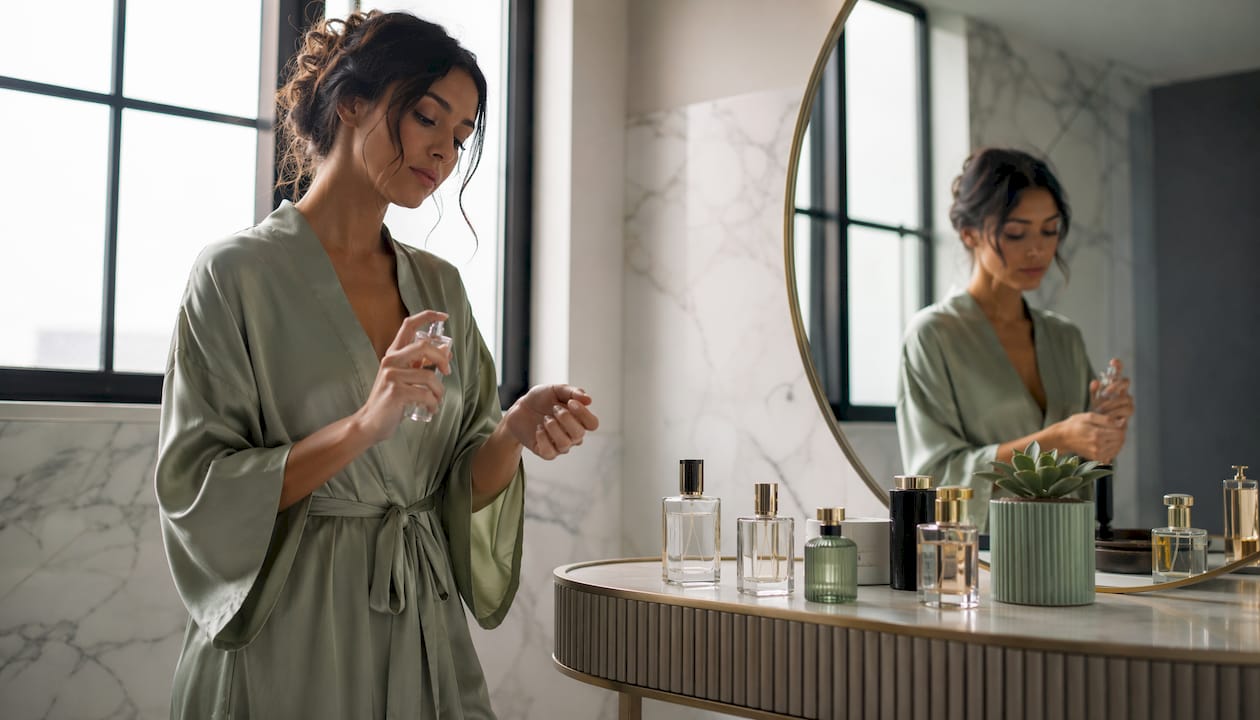
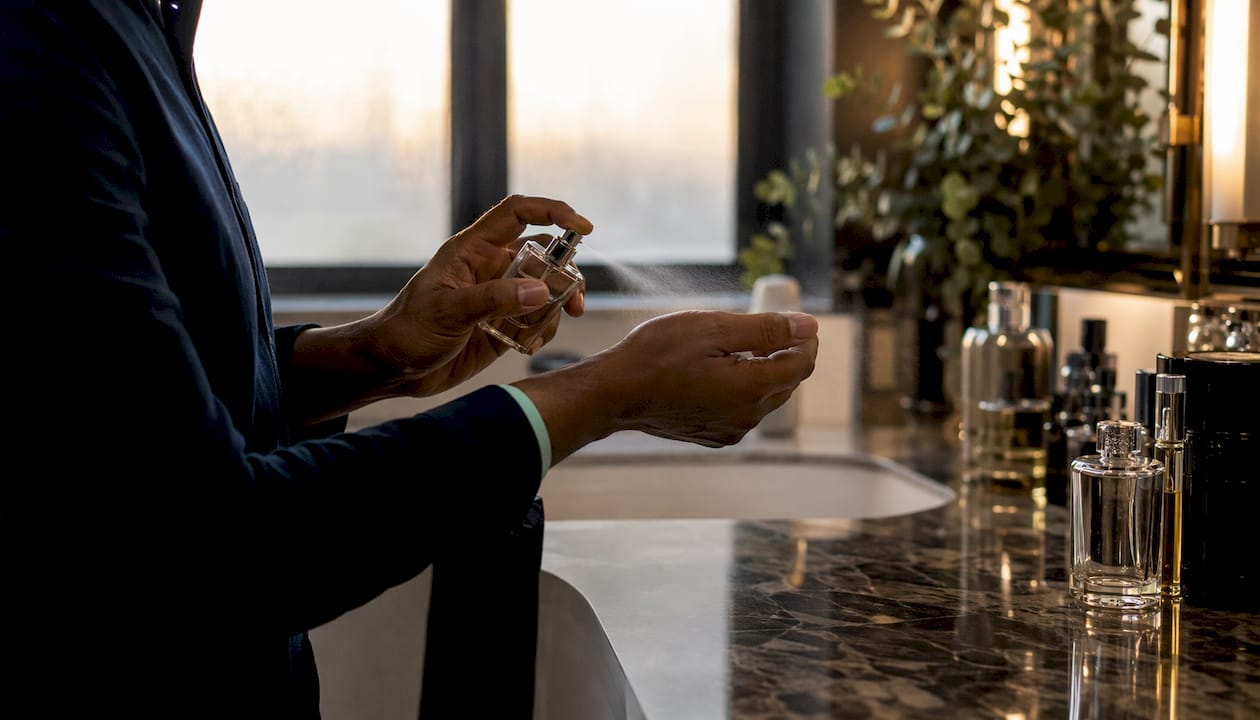
- Spray your fragrance from a short distance; a few sprays is enough
- Do not rub your wrists together
- Pack a travel atomiser and a small occlusive for midday touch-ups
Table of Contents
- How do you make perfume last all day with a morning routine?
- Where should you apply perfume for the best results?
- Which fragrances naturally last longer on skin?
- How does layering products extend your fragrance’s wear?
- How should you store perfume to keep it performing?
- What travel formats work best for midday top-ups?
- Why do these methods actually work?
- What common mistakes make your perfume disappear faster?
- Does talcum powder help perfume last longer?
- Should you apply perfume before or after getting dressed?
- How do environmental factors affect your scent throughout the day?
- Key takeaways
- The real reason longevity starts with the composition
- Alexandriauk fragrances built for all-day wear
- Further reading and sources
How do you make perfume last all day with a morning routine?
A repeatable five-step sequence, done in the right order, makes the difference between a scent that fades by noon and one that carries through the evening.
- Shower, then moisturise immediately. Apply an unscented body lotion to your pulse points while skin is still slightly warm. Dry skin offers fewer anchoring points for fragrance molecules; a hydrated surface holds them far longer.
- Apply a thin occlusive layer. Once the moisturiser has absorbed, dab a small amount of petroleum jelly on your wrists, inner elbows, or base of throat. This waterproof barrier slows evaporation, adding one to several hours of additional wear.
- Spray, don’t dab. Hold the bottle 10–15 cm from skin and spray two to four times. Spraying disperses the accord evenly; dabbing concentrates it and risks contamination of the bottle nozzle.
- Optional hair or coat-lining spritz. A single light spray on the ends of hair or the inner lining of a coat extends the sillage beautifully. Hair is porous and retains scent well; avoid soaking it with alcohol-heavy formulas.
- Pack your travel kit. A refillable atomiser and a small tin of occlusive means you can re-anchor and reapply discreetly at lunch.
Pro Tip: If your skin is very dry, swap petroleum jelly for jojoba oil or a neutral lipid body oil. Its molecular structure is closer to human sebum, so it anchors fragrance without any waxy residue.
Where should you apply perfume for the best results?
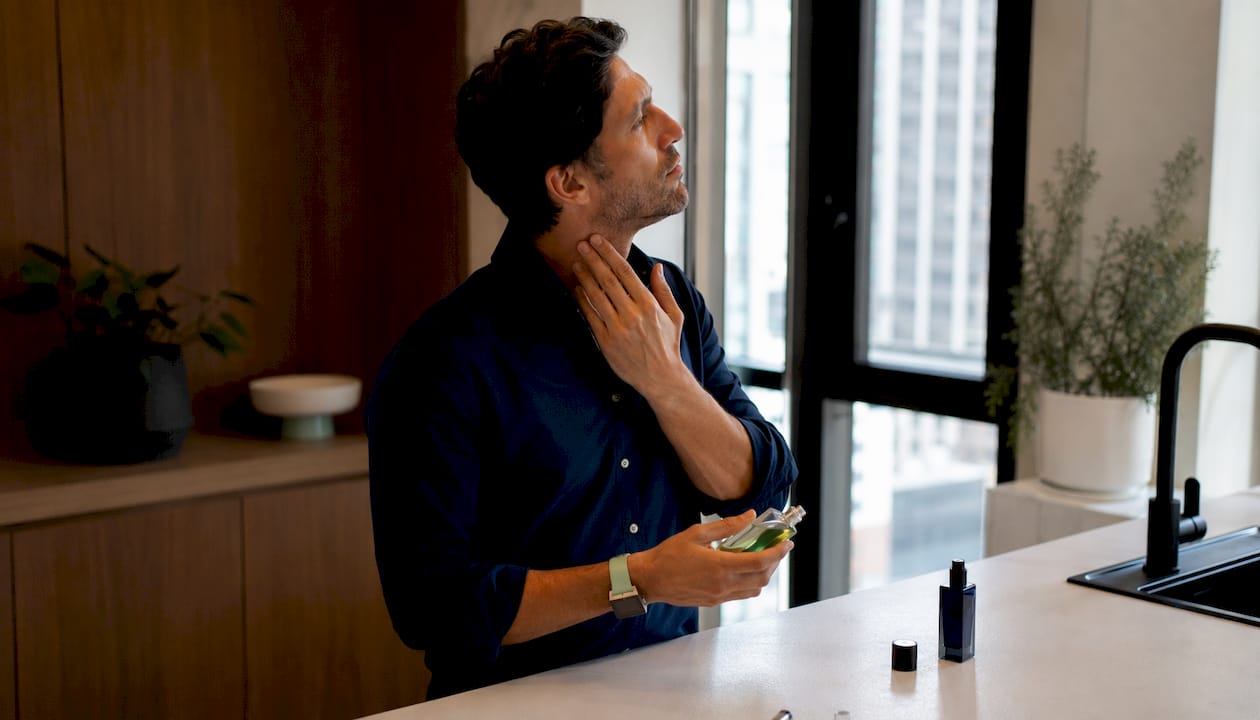
Placement shapes both projection and longevity. Warmth at pulse points accelerates the diffusion of top notes and keeps heart and base notes releasing gradually throughout the day.
Recommended pulse points:
- Wrists (spray, never rub)
- Inner elbows
- Base of throat and clavicles
- Back of the neck
- Behind the knees in warmer months
Avoid spraying inside tight collars, where friction and fabric absorption will destroy the top notes within the hour. Over-spraying a single point creates a dense, short-lived burst rather than a measured, evolving trail.
“Applying Vaseline, which basically has no water content, means less evaporation of your perfume. It lasts for way longer.” — Dr Adel, dermatologist, via Surrey Live
Pro Tip: Spray the back of the neck rather than the front if you want a more intimate sillage that others notice when you move past them.
Which fragrances naturally last longer on skin?
Technique matters, but the formula you choose sets the ceiling. Perfumes commonly contain 15–25% fragrance oil in a base of alcohol and water; higher oil concentration means slower evaporation and longer wear.
| Concentration | Typical oil content | Expected wear |
|---|---|---|
| Parfum (extrait) | 15–25% | 6–12 hours |
| Eau de parfum (EDP) | 15–25% | 4–8 hours |
| Eau de toilette (EDT) | 5–15% | 3–5 hours |
| Eau de cologne (EDC) | 2–5% | 2–3 hours |
Beyond concentration, base note families act as natural fixatives: woods, resins, musks, vanilla, leather, patchouli, and gourmand bases are low-volatility materials that anchor the entire composition. A woody EDP will outlast a citrus EDT on the same skin by several hours, even with identical application technique.
Pro Tip: If you love lighter, luminous accords, apply them over a neutral, long-wearing base oil on your pulse points. The oil acts as a fixative the formula itself lacks.
How does layering products extend your fragrance’s wear?
Layering is not about stacking multiple perfumes; it is about building a compatible foundation that gives your chosen scent something to grip.
- Unscented moisturiser first. A neutral lotion under perfume improves anchoring without introducing competing notes.
- Fragrance second. Spray directly onto the moisturised, slightly tacky skin.
- Compatible hair mist last, if desired. A lightly scented or unscented hair mist extends the trail without muddying the accord.
Strongly scented body washes and lotions are the most common layering mistake. When a heavily perfumed vanilla lotion meets a delicate floral EDP, the result is an unpredictable new accord that neither smells like the original nor lasts as long. Neutral is always the safer choice.
The safest layering strategy is to treat your moisturiser and body wash as a blank canvas — let the perfume itself be the statement.
For those who want to simulate a full fragrance wardrobe without buying matching sets, a neutral body oil from a range such as those explored in this guide to carrier oils and skin penetration provides a versatile, scent-free base for any fragrance.
How should you store perfume to keep it performing?
Heat, light, and oxygen are the three enemies of a well-composed fragrance. Light, heat and oxygen cause perfumes to flatten or develop off-notes over time, which shortens both the scent’s life in the bottle and its performance on skin.
- Store bottles in a cool, dark drawer or cupboard, not on a windowsill or bathroom shelf
- Keep the cap on tightly between uses to minimise oxidation
- Maintain an upright position to prevent the stopper degrading
- Keep the original box; it blocks light and insulates against temperature swings
- In the UK, central heating creates warm, dry rooms in winter — move bottles away from radiators
Pro Tip: The bathroom is the worst room in the house for perfume storage. Steam, heat, and humidity cycles degrade volatile materials faster than almost any other domestic environment.
What travel formats work best for midday top-ups?
A well-chosen portable format means you never have to choose between a fading scent and lugging a full bottle.
- Refillable atomisers (5–10 ml) are the most practical option; fill them from the original bottle using a decanting funnel to avoid oxidation
- Sample vials and mini sprays from brands are ideal for handbags; they are sealed and pre-filled
- Solid perfumes in balm or wax form are alcohol-free, TSA-friendly, and gentle on dry skin
- Decanting correctly means transferring in a single, swift pour rather than repeated small fills, which introduces more oxygen each time
Pro Tip: Keep a small tin of petroleum jelly or a neutral lip balm with your atomiser. Re-prime the pulse point with the occlusive, wait ten seconds, then spray. The top-up will last noticeably longer than spraying onto bare, dry skin.
Why do these methods actually work?
The science is straightforward. Petroleum jelly creates a waterproof barrier on the skin’s surface; because it contains virtually no water, it slows the evaporation of the fragrance oils sitting above it. The result is one to several additional hours of perceived wear.
Friction destroys fragile top notes by generating localised heat that accelerates the volatilisation of the lightest molecules. Rubbing wrists together after spraying is the single most common mistake fragrance lovers make, and it collapses the designed transition between top, heart, and base notes.
Then there is olfactory fatigue. Fragrance expert Anita Bhagwandas notes that olfactory adaptation explains why you stop noticing a scent despite it still being present on your skin. Others around you can still smell it clearly. This is why reapplying too heavily is counterproductive: you are compensating for a perception shift, not an actual absence of scent.
Pro Tip: If you think your perfume has vanished, ask someone nearby before reaching for the bottle. Olfactory fatigue is almost always the explanation.
What common mistakes make your perfume disappear faster?
- Rubbing wrists together after spraying generates heat and friction that destroys top notes within minutes
- Using strongly scented moisturisers that clash with the perfume’s pyramid, creating an unpredictable and short-lived accord
- Storing bottles on bathroom shelves or windowsills, where heat and light degrade the formula over weeks
- Over-spraying in the morning accelerates olfactory fatigue and wastes the fragrance without improving actual longevity
Pro Tip: Two well-placed sprays on primed pulse points will always outlast six hasty sprays on dry, unprimed skin.
Does talcum powder help perfume last longer?
Talcum powder applied lightly to pulse points before spraying creates a dry, slightly textured surface that helps fragrance molecules adhere rather than slide off. It works on a similar principle to the occlusive method: it modifies the skin’s surface to give the perfume something to grip. The effect is particularly noticeable on oily skin, where sebum can sometimes cause certain accords to shift or fade unevenly. A light dusting, allowed to settle before spraying, is all that is needed.
Should you apply perfume before or after getting dressed?
Apply perfume to skin before dressing, not after. Spraying onto bare skin at pulse points allows the fragrance to warm and evolve naturally with your body heat. Dressing immediately afterwards risks transferring the wet fragrance onto fabric, which can stain delicate materials and alter the scent’s development. The exception is a deliberate coat-lining or scarf spritz, which works well for extending sillage in cooler months because fabric holds scent for a long time without the same staining risk as a pale silk blouse.
How do environmental factors affect your scent throughout the day?
Humidity, heat, sweat, and friction all accelerate evaporation in different ways. High humidity in summer can actually help diffuse a fragrance initially, but sustained heat and perspiration break down the accord faster. Friction from clothing rubbing against pulse points, particularly at the wrists and neck, strips away top and heart notes progressively. In the UK’s variable climate, the transition from a heated office to cold outdoor air creates repeated expansion and contraction of fragrance molecules on skin, which shortens wear. Layering correctly and choosing a woody or resinous EDP over a light EDT gives you a formula resilient enough to handle those shifts.
Key takeaways
The most reliable way to extend perfume longevity is to prime skin with an occlusive, spray an EDP on warm pulse points, and never rub.
| Point | Details |
|---|---|
| Moisturise and prime first | Apply unscented lotion, then petroleum jelly on pulse points before spraying. |
| Choose EDP or parfum concentration | Higher fragrance oil content means measurably longer wear than EDT. |
| Spray, never rub | Friction destroys top notes; allow the fragrance to dry naturally on skin. |
| Store bottles correctly | Keep perfume in a cool, dark drawer away from heat, light, and steam. |
| Alexandriauk for long-wear options | Alexandriauk’s curated range includes EDP-concentration fragrances built on woody and resinous base notes for all-day wear. |
The real reason longevity starts with the composition
There is a tendency in fragrance advice to treat longevity as purely a technique problem, as if the right application ritual can rescue any formula. It cannot. A well-composed perfume is engineered for longevity from the inside out: the perfumer selects base materials, specifically musks, woods, and resins, precisely because their low volatility anchors the entire composition to skin. No amount of Vaseline will transform a 3% EDC into an all-day sillage.
The practical implication is this: if your current fragrance consistently fades within two hours despite correct technique, the formula itself is the limiting factor. Switching to a higher concentration or a base-note-forward composition will do more than any application hack. Technique and formula work together; neither substitutes for the other. The most satisfying approach is to choose a scent you love that is also built to last, then apply it correctly.
Alexandriauk fragrances built for all-day wear
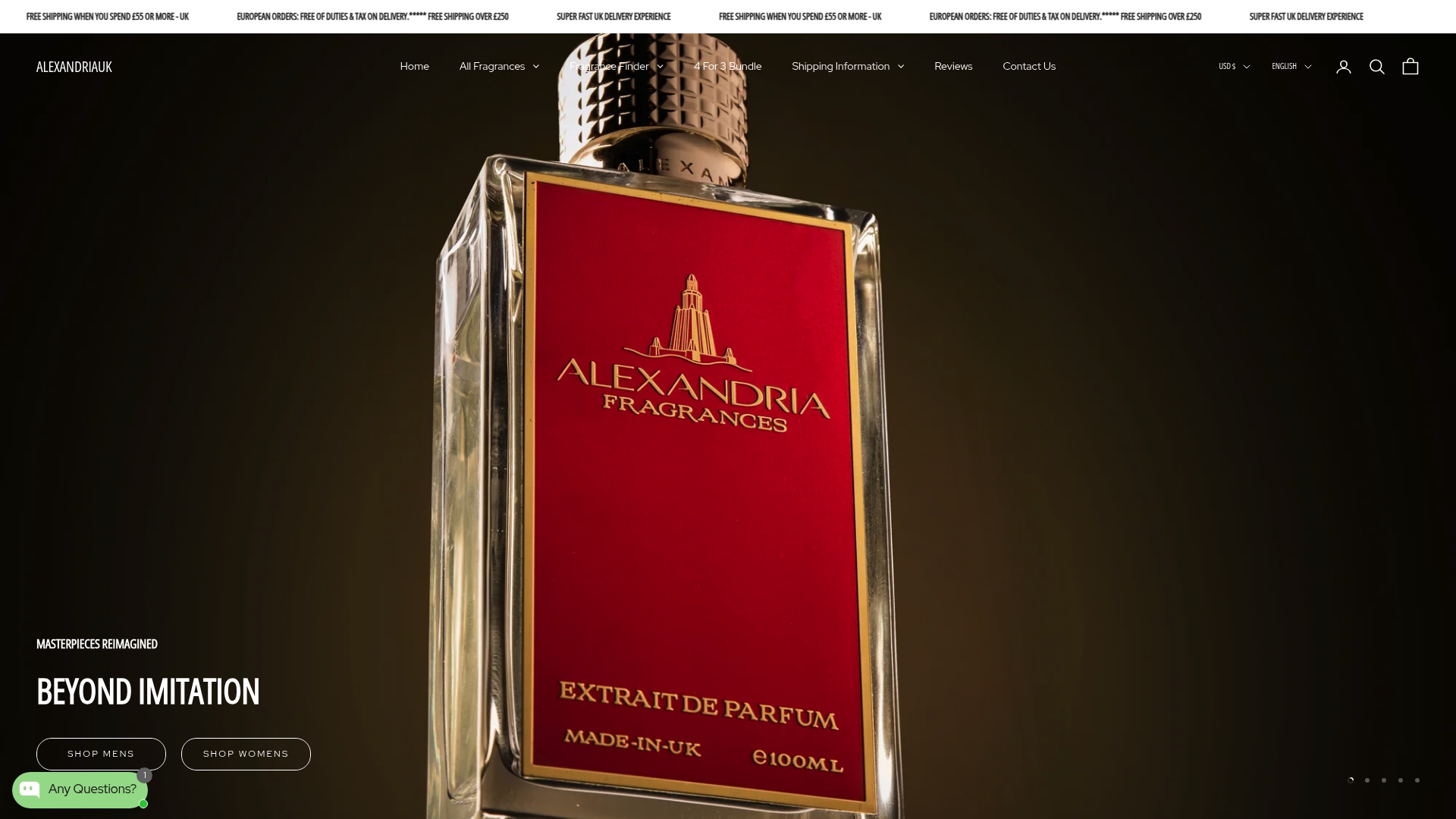
For those who want a fragrance that does the heavy lifting from the first spray, Alexandriauk has curated a selection of EDP-concentration compositions anchored in precisely the base note families this guide recommends. Mediterranean Coast opens with luminous freshness before settling into a warm, lasting base, making it a refined choice for those who want presence without weight. Miraculous Oud, inspired by Oud Maracuja, is a luscious, resinous composition where the oud and gourmand base notes act as natural fixatives, delivering the kind of tenacious sillage that carries through a full working day and beyond. For a darker, more hedonistic character, Mystere #29, inspired by Le Labo’s Noir 29, brings a woody depth that clings beautifully to primed skin. Those who prefer something fresher without sacrificing longevity will find Brasilia 13zz01 a compelling option.
For a deeper guide to selecting a fragrance with superior staying power, the Alexandriauk long-lasting perfume guide covers concentration, note families, and skin chemistry in full. Browse the full collection at alexandriauk.com and find the accord that endures.
Further reading and sources
The claims in this article draw on the following sources, each chosen for the authority of its evidence or expertise.
- Surrey Live: Experts say a £1 household item will make your perfume last all day — dermatologist Dr Adel’s explanation of how petroleum jelly reduces evaporation; the source for the occlusive science throughout this guide.
- Real Simple: This Vaseline Hack Can Make Your Fragrance Last Longer — covers fragrance oil concentration and how EDP versus EDT affects wear.
- The Guardian: Does applying petroleum jelly under your perfume make the scent last longer? — fragrance expert Anita Bhagwandas on olfactory fatigue and perception versus actual longevity.
- The Guardian: I have dry skin — how do I make perfumes last on me? — skin hydration, sebum, and the case for jojoba oil as a fragrance primer.
- GlamGeek: How to make perfume last longer (UK) — UK-specific tips covering rubbing technique, layering, storage, and fabric application.
- Claudia Scattolini: Why doesn’t perfume last on the skin? — perfumer-level explanation of volatility, the note pyramid, and base note fixatives.
- Alexandriauk: How to choose long-lasting perfume for all-day fragrance — the brand’s pillar guide on selecting fragrances with superior longevity; recommended for deeper study.
- Alexandriauk: 12 Expert Tips — How to Make Your Perfume Last All Day — practical, tested tips from Alexandriauk on all-day fragrance routines.